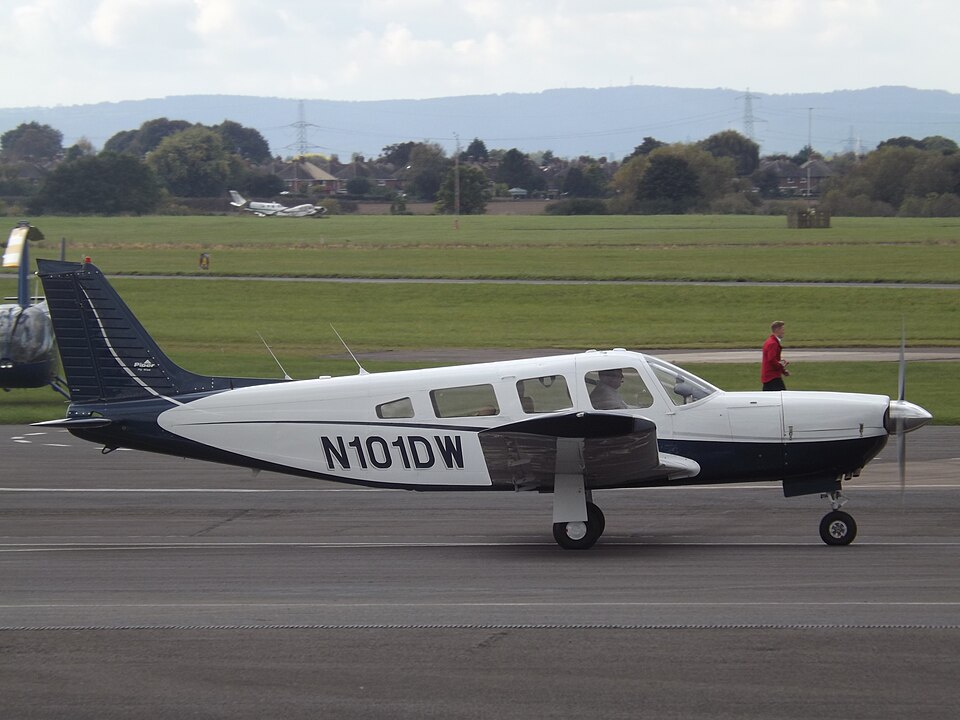
History of the Flight
The aircraft, a Piper PA-32R-300 (registration N101DW), departed Panshanger, Hertfordshire, for Oostend, Belgium, with four persons on board. The weather was CAVOK with a light wind. The aircraft climbed to 5,000 ft for the sea crossing. Initially, all electrical systems appeared normal. About five miles offshore, the pilot attempted to engage the autopilot without success. Shortly after, the primary GPS receiver failed, radio reception became garbled, and the pilot realized all electrical systems were failing. He turned back, using a map to navigate, and made a radio call to Southend Airport ATC advising of the problem. Shortly thereafter, all remaining electrical systems failed. With passengers becoming anxious, the pilot decided to make an expeditious landing at Southend. Using a hand-held radio, he made blind transmissions on the Southend frequency advising his intention to land, but received no response. He positioned the aircraft downwind for Runway 24 and, during landing checks, selected the landing gear to DOWN. He observed emergency vehicles on the airfield and, seeing the runway clear, continued to land. During touchdown it became apparent the landing gear was not down. The aircraft initially slid along the runway centerline before turning left and coming to rest. There was no fire, but as a precaution, the airport fire service sprayed the aircraft with foam. The pilot and passengers were uninjured and vacated normally. Southend ATC had received the blind transmissions and had placed emergency vehicles on standby and kept the runway clear. When visual with the aircraft on final, they saw the gear was retracted and made blind transmissions to inform the pilot, but were unable to make contact.
Aircraft Examination
After recovery, a local maintenance organization found that lifting the aircraft and selecting the manual override lever deployed the landing gear under gravity, which locked down. The AAIB later examined the aircraft. Damage was noted to the underside, flaps, engine cowlings, exhaust system, and propeller. The right wing light lens was damaged, and the engine had been shock-loaded. Examination of the alternator installation found it properly mounted with the drive belt correctly tensioned, but several electrical wire terminations were of poor standard. The main power output cable had failed through most of its cross-sectional area at the lug connecting it to the alternator. The battery, still connected, registered 11.6 volts off-load but quickly dropped to 6.5 volts when the master switch was selected ON. The ALT warning light, which illuminates when there is no alternator output, was very dim compared to adjacent warning lights. The ammeter had a zero error, indicating approximately 10 amps when no output was present.
Maintenance History
The last annual inspection was completed on 1 July 2008 and certified in the log books. The alternator was replaced with a serviceable unit on 3 July 2008, certified as 'ground checked satis', but no part or serial numbers were recorded.
Discussion
The integrity of the charging system appeared compromised by the poor electrical connections to the alternator, likely preventing it from supplying the total electrical demand. Initially, the battery was sufficiently charged, but any shortfall in alternator output would have discharged the battery over the flight, leading to failure of electrical services. The ammeter zero error and dim ALT light likely made it difficult for the pilot to detect the problem until the rapid onset of failure. The manual gear extension system was demonstrated serviceable during recovery and would likely have lowered the gear if selected in flight.
Conclusions
The pilot considered the accident was caused by a failure of the aircraft's electrical system. The AAIB noted that while this was a contributory factor, the manual gear extension system was serviceable and would likely have succeeded if selected.