Synopsis
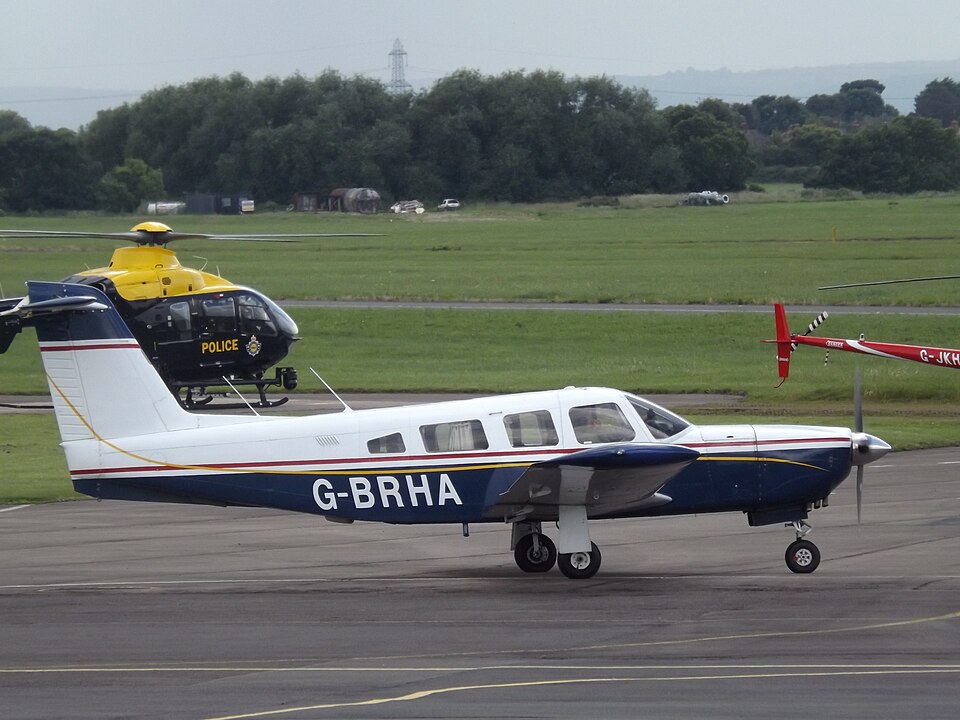
On 23 June 2010, a Piper PA-32RT-300 Cherokee Lance II (registration G-BRHA) sustained damage during a landing at Earls Colne Airfield, Essex, when the pilot inadvertently left the undercarriage retracted. The pilot was not injured.
History of the Flight
The pilot, who had not flown for some time, planned a local flight to conduct general handling practice. After returning to the airfield, he decided to perform a Practice Forced Landing (PFL) from overhead, as the weather was fine and no other traffic was in the circuit. He commenced the PFL at approximately 2,500 ft above the airfield by moving the throttle lever back to idle to simulate an engine failure.
Following the PFL, while close to the ground, the pilot considered the aircraft to be in an ideal position to continue the approach to Runway 24. He elected to land rather than go around, as originally intended. During the subsequent touchdown, the propeller and lower fuselage struck the runway surface, and it became apparent that the undercarriage was not extended. The aircraft slid along the asphalt runway before veering left and coming to rest on the grass adjacent to the runway. The pilot vacated the aircraft via the normal exit.
Aircraft Damage
The aircraft sustained damage to the propeller, engine (shock-loaded), fuselage, and flaps. During recovery by the maintenance company, the undercarriage lever was observed in the 'UP' position. When placed on jacks, the undercarriage operated satisfactorily when tested.
Pilot Experience
The pilot, aged 61, held a Private Pilot's Licence and had a total flying experience of 675 hours, of which 511 were on type. He had flown only 2 hours in the last 90 days and none in the last 28 days.
Warning System
The aircraft is equipped with an undercarriage warning horn that activates if engine power is reduced below approximately 14 inches of manifold pressure and the undercarriage is not locked down. The pilot recalled hearing the horn activate, as expected, when he reduced power to idle at the start of the PFL, and it continued to sound until the aircraft landed. However, by the time he decided to land, he had become accustomed to the sound and did not appreciate its significance.
Probable Cause
The pilot attributed the accident to his last minute decision to land, rather than go around.