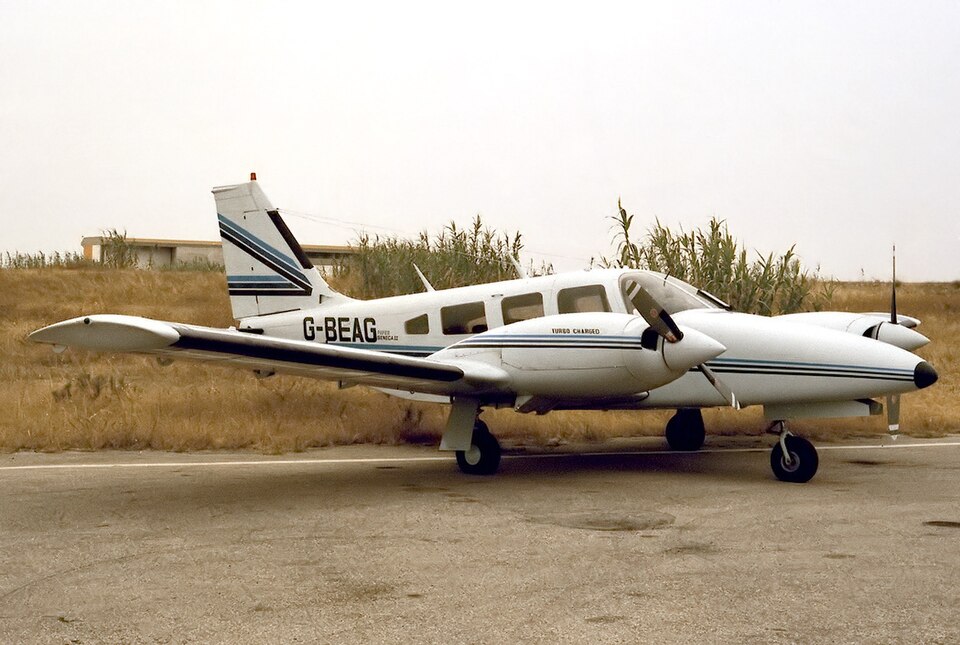
Incident Overview
On 14 December 1999 at 1738 UTC, a Piper PA-34-200T (registration G-BEAG) was preparing for a night training flight at Oxford Airport. The aircraft carried two crew members—an instructor and a student pilot—and one passenger, another student pilot acting as observer. No injuries were reported.
Aircraft and Crew
The PA-34-200T, manufactured in 1976, was powered by two Continental Motors LTSIO-360-EB1 piston engines. The commander held a Commercial Pilot's Licence with an Instructor Rating, was 39 years old, and had 3,267 total flying hours, with 65 hours on type. His flight time in the previous 90 days was 62 hours, and in the previous 28 days, 46 hours.
Pre-Flight and Engine Start
Before boarding, the instructor conducted a pre-flight inspection using the checklist, including checking the parking brakes by releasing and reapplying them; they appeared to function normally. After the instructor and students boarded, pre-start checks were completed, and the student released and reapplied the parking brakes similarly. During both engine starts, the pilots covered the foot brakes, and the instructor visually confirmed that the aircraft was not moving.
Collision
While the instructor looked inside the cockpit as the student completed further checks, he suddenly realized the aircraft was yawing violently to the left and quickly closed both throttles. The left engine had stopped, and the right engine was shut down immediately. The aircraft had collided with a parked, unattended Piper PA-28 (registration G-BODC). The instructor checked the parking brake and found it was still ON, but upon reapplying it, an extra 1/4 inch of movement was possible.
Damage
The left propeller of G-BEAG embedded itself in the rear of the PA-28, damaging the rudder and tail cone, with debris thrown behind the line of parked aircraft. The right propeller damaged the PA-28's right aileron.
Pilot's Observations
In a comprehensive report, the pilot considered that the aircraft may have moved forward after engine start because the brakes were not fully applied. He noted that it is normally necessary to pump the brake several times before applying it. He stated that while looking inside the cockpit, he had no sensation or visual cues of movement until the abrupt yawing movement, and that during daylight, peripheral vision might have provided additional cues.