History of the Flight
The flight was conducted for Instrument Rating Training. The student pilot was to perform a low approach and go-around, followed by a circuit that included a touch-and-go landing. The entire exercise was to be flown with one engine throttled back to simulate an engine failure.
During the go-around, the landing gear unsafe warning sounded. The instructor silenced the warning by adjusting the throttle lever position of the throttled-back engine.
The student recalled performing the downwind checks. During the turn onto the base leg, the instructor verified that the mixtures were set to rich, the propeller levers were fully forward, and that the landing gear indicator showed three green lights. The cockpit had patches of sunlight; the instructor later considered that the landing gear indication lights might have appeared illuminated when they were not.
Air traffic control cleared the aircraft to perform a touch-and-go, and no final landing call was made. The student flared the aircraft, and shortly thereafter the propellers struck the runway. The aircraft settled onto its belly and came to a stop on the runway centreline. None of the occupants recalled hearing the gear unsafe warning during the approach or landing.
Aircraft and Crew Information
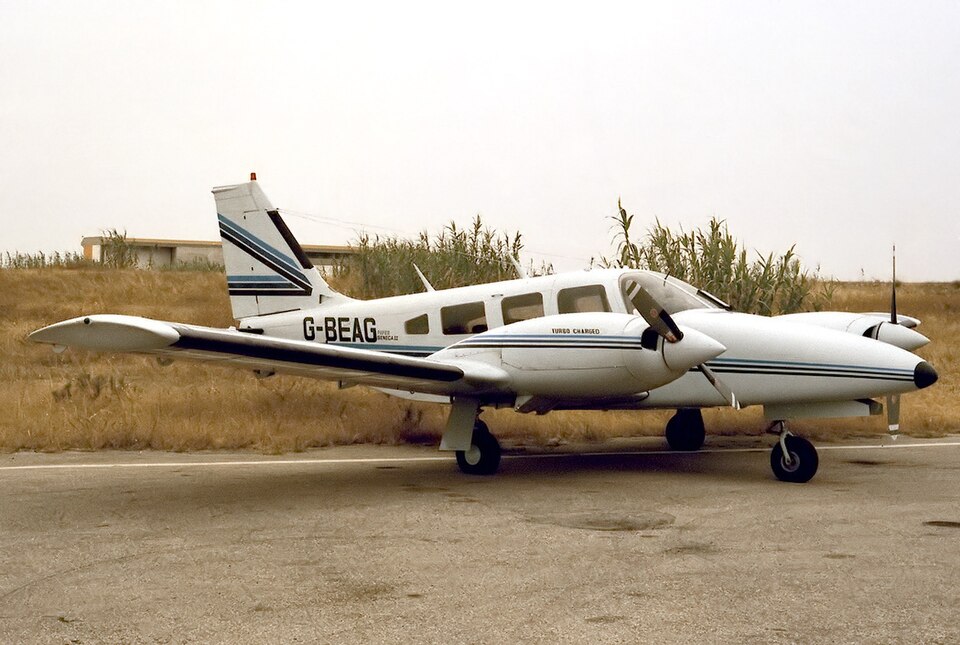
The aircraft was a Piper PA-34-200T Seneca II, registration G-BEAG, manufactured in 1976. It was powered by two Continental Motors Corp TSIO-360-EB piston engines. The commander held a Commercial Pilot’s Licence, was 55 years old, and had accumulated 3,645 flying hours, of which 1,370 were on type. The two remaining occupants were the student and a passenger; no injuries were reported.
Damage
The accident resulted in damage to the aircraft's underside and propellers, and the engines experienced shock loading.
Conclusions
The instructor concluded that the pre-landing checks had not been performed adequately and consequently the landing gear was not selected down.