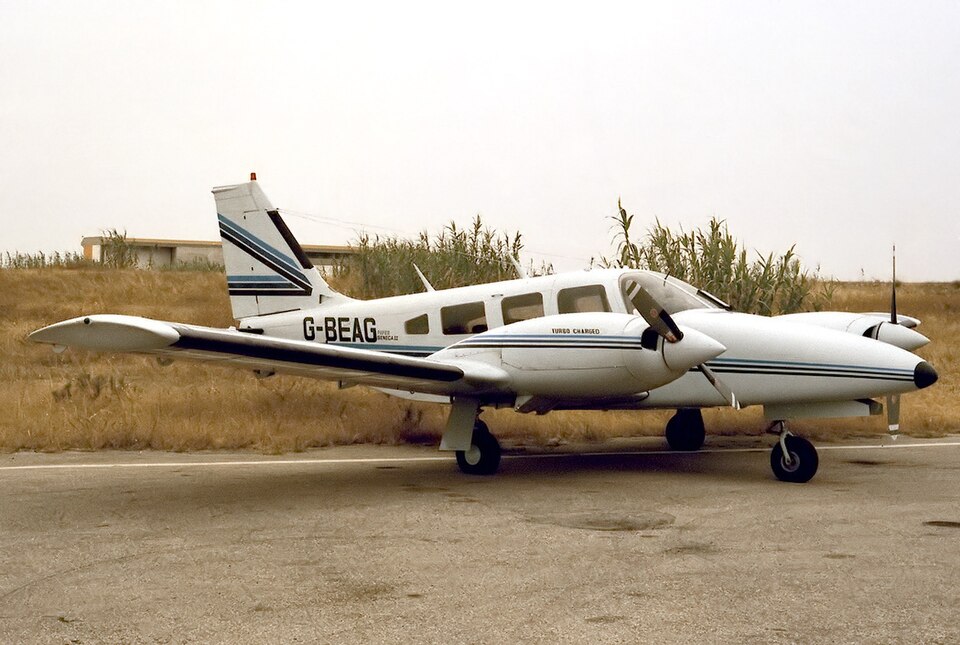
History of the Flight
The flight, intended to familiarize a commercial pilot with the Piper PA-34-200T Seneca II, began with a pre-flight inspection and engine run-up without incident. The commander briefed the student on possible emergencies and instructed him to observe. After lining up on Runway 19 with 940 metres available, ATC cleared the takeoff. The commander held the aircraft with toe brakes, advanced throttles to 2,000 RPM, then increased to 37 inches of manifold pressure. Upon releasing the brakes, the takeoff roll began. Acceleration initially appeared normal until the student called out 60 kt, at which point the aircraft yawed right. A strange noise was heard from the right side, and both occupants felt reduced acceleration. The commander sensed periodic retardation similar to inadvertent brake application but confirmed the student's feet were clear of the pedals. Airspeed stagnated at 65 kt. Assuming a power loss and mindful of remaining runway, the commander aborted, closing throttles and applying toe brakes. Wheel braking had little effect. Concerned about stopping before the runway end, the commander attempted left steering via nose wheel and differential braking. At about 40 kt, the aircraft turned left and departed the runway. The right wing tip struck the boundary hedge at an estimated 30 kt, causing the aircraft to slew right and come to rest. Both pilots, wearing lap and diagonal harnesses, exited through the right door uninjured. They noticed a fire around the left main landing gear, which was extinguished by airport fire services about one minute later.
Aircraft Damage
The right wing sustained significant leading-edge damage from hedge contact, rupturing the fuel tank and crushing the nose cone. The left main landing gear collapsed as its side brace detached from the damaged main wing spar during the crash.
Examination of the Brake System
Post-accident examination by the maintenance organization revealed severe overheating of the left brake unit, with brake pads welded to the disc. The right brake also showed overheating and evidence of dragging pads, but the wheel was free to turn. The parking brake lever moved, but when released, the brake master cylinder resisted movement at the end of its travel. After cleaning, resealing, and bleeding, the brake system functioned satisfactorily. Tyres showed no unusual abrasion or locked-wheel evidence.
Engine Examination
Initial examination of both engines and a detailed strip inspection of the right engine found no pre-existing defects.
Previous Flight
On the prior flight, the pilot reported that during takeoff the wheels had 'skipped' several times, as if locking and releasing. The subsequent landing and taxi were normal, but no brake inspection was conducted.
Discussion
A loss of performance during takeoff led to the decision to reject. The initial acceleration was normal to 60 kt, engine indications were normal with balanced power, and post-accident inspections found no pre-existing engine defects, making engine failure highly unlikely as a cause. The inability to decelerate resulted in runway excursion and hedge collision. Dragging brakes, possibly from prolonged application during the takeoff roll, would cause brake fade and loss of acceleration, consistent with the commander's report of little braking effect. However, the heavy left brake application to avoid the hedge would explain the observed overheating and fire. Although no failures were found in the brake system, the restriction of the master cylinder raised the possibility that full brake release may not have occurred. The maintenance organization deemed this unlikely, and the lack of brake problems during taxi supported their view. Nevertheless, overheating on both units, the fire, and reports from the previous flight indicated partial brake engagement during takeoff. Despite a full investigation, no definitive pre-existing defect that could have caused dragging brakes was found.