History of the Flight
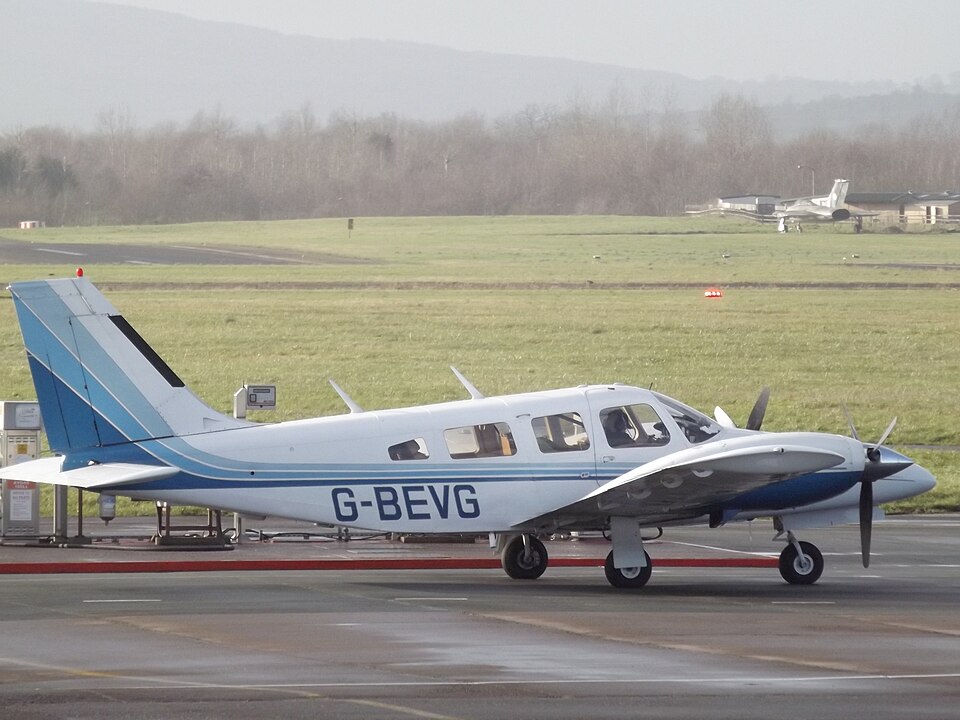
The aircraft, a Piper PA-34-200T Seneca II registered G-BEVG, departed Kemble on a private flight to Sibson Airfield, Peterborough. Landing on Runway 24 in light winds with no significant crosswind, the pilot reported a normal touchdown with all three landing gear indicating down and locked ('three greens'). Almost immediately after touchdown, a muffled bang was heard. The nose lowered, and both propellers contacted the ground. The aircraft continued along the runway in this attitude as the pilot applied left rudder to clear the runway side, but it came to rest left of the centre line. The pilot shut down the magnetos, switches, and fuel, and the three occupants evacuated without injury.
Examination and Maintenance
After the accident, when the nose was lifted by maintenance personnel, the nose landing gear (NLG) leg swung down and locked into position under gravity. The battery master switch was turned on, and the 'three greens' indication was confirmed. The aircraft was towed clear without further incident. Retraction tests showed all three gear assemblies operated satisfactorily. Detailed examination revealed no broken or damaged components, but wear was observed in the drag link bushings and bolts, and in the aft actuator attachment. Grease on the components appeared old, possibly causing stiffness in the linkage.
The aircraft's documentation showed an Annual Inspection completed on 22 May 2007, and another in September 2007 after eight flying hours as a condition of sale. A 50-hour Inspection was completed on 29 October. The aircraft had made approximately 45 flights since the May inspection. At the May inspection, the bolt attaching the nose gear upper drag link to the trunnion block had been replaced in accordance with Airworthiness Directive (AD) No 2005-13-16, which mandated Service Bulletin 1123A. That bolt had shown evidence of wear. Lubrication of landing gear components is required during Annual Inspections.
Discussion
The cumulative effect of wear in bushes and bolts, combined with stiffness from inadequate or old grease, may have restricted the drag link's movement to the overcentre position, causing the NLG collapse. The undulating nature of the grass runway during the landing roll may have exacerbated the situation. However, no technical cause was determined for the collapse. AD No 2005-13-16 had addressed similar issues identified in previous NLG collapses. The AAIB noted a history of such collapses in PA-34 series aircraft, with eight recent occurrences listed. The manufacturer had issued Service Bulletin 1123 and revisions, and the FAA issued the AD mandating its actions. Since the AD was relatively recent, its benefits might not yet be fully reflected in reduced collapse incidence, so no further safety recommendations were made.