Incident Overview
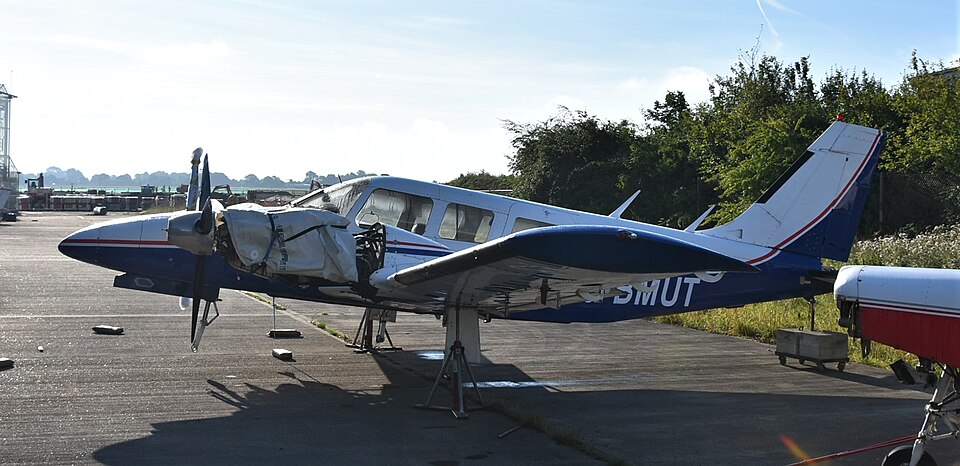
On 3 August 2003 at 0917 UTC, a Piper PA-34-200T Seneca II (registration G-BMUT) operated by an unnamed training organization was conducting a training flight at Newcastle Airport, Newcastle Upon Tyne. The aircraft was manufactured in 1975 and powered by two Continental LTSIO-360-EB piston engines. The pilot, aged 60, held an Airline Transport Pilot's Licence and had accumulated 20,000 flying hours, of which 300 were on type. He had flown 191 hours in the previous 90 days and 27 hours in the last 28 days. The flight was a training sortie with two crew on board and no passengers.
Sequence of Events
According to the pilot's report, the aircraft performed a touch-and-go manoeuvre followed by a simulated engine failure and a single-engine circuit. The downwind leg was extended to allow other traffic to depart, and the selection of landing gear was delayed until final approach. Despite moving the landing gear lever to the 'DOWN' position, the aircraft touched down with the landing gear retracted, resulting in extensive damage to the underside of the fuselage, propeller blades, and left wing spar.
Post-Flight Findings
After the incident, another instructor inspected the aircraft and confirmed that the landing gear lever was in the 'DOWN' position. The pilot stated that he had not checked the illumination of all three green landing gear lights before touchdown. He attributed this oversight to the higher workload during the simulated single-engine approach, a change in the pre-landing checks sequence, and distraction from other manoeuvring aircraft. The pilot suggested that the error could have been prevented by keeping his hand on the landing gear lever until all three green lights were confirmed illuminated.
Damage
The aircraft suffered extensive damage to its underside, including the propeller blades and left wing spar. No injuries were reported among the crew.
Investigation
The information for this summary was derived from an Aircraft Accident Report Form submitted by the pilot to the UK Air Accidents Investigation Branch (AAIB), which published the findings in AAIB Bulletin No. 10/2003 (Ref: EW/G2003/08/04).