History of the Flight
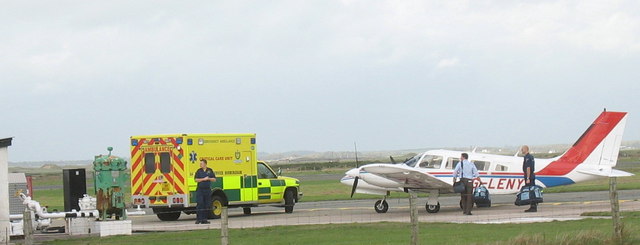
The aircraft, a Piper PA-34-220T Seneca III registered G-LENY, was scheduled to fly from Oxford to Toussus le Noble in France with five passengers. The day before the incident, the commander calculated the fuel required as 242 litres (63.7 US gallons) and sent a fax to the refuelling organisation requesting 100 litres of fuel, which would have brought the total onboard to 278 litres (73.2 US gallons). However, the fax machine at the refuelling point had run out of toner, so the request did not print, and the aircraft was not refuelled.
On the morning of the incident, the commander performed the pre-flight inspection, which included a visual check inside the fuel tanks and confirmation that the fuel gauges indicated the correct amount. She could not see any fuel in the tanks but, given the reduced amount to be carried, was not concerned. The fuel gauges indicated approximately 30 US gallons in the left tank and 15 US gallons in the right tank. She expected to see about 36 US gallons in each tank but doubted the accuracy of light aircraft fuel gauges.
The aircraft departed Oxford at 0810 hrs and climbed to 3,000 feet for the VFR transit. Weather conditions were wind from 330° at 10 kt, visibility over 10 km, and broken cloud at 3,500 feet. After approximately one hour, the right engine lost power and began running roughly. The commander saw the right tank fuel gauge indicating empty and zero fuel pressure to the right engine; the left tank showed 10 US gallons. She shut down and feathered the right engine, then diverted to the nearest suitable airfield, advising ATC. A safe single-engine landing was made at Dieppe.
The commander disembarked the passengers and contacted the company for assistance. Fuel was cross-fed to the right tank, and engine runs and power checks confirmed fuel starvation rather than a mechanical issue. After the checks, the maintenance organisation authorised continuation of the flight. The aircraft was refuelled, passengers boarded, and an uneventful transit to Toussus le Noble completed.
Seneca III Fuel System
The Seneca III has two main fuel tanks, one in each wing, with a total capacity of 371 litres (98 US gallons). The wings have significant dihedral, and the filler cap for each tank is at the outboard end. When the tanks are less than about 75% full, it is not possible to 'dip the tanks' or see fuel when removing the filler cap. The maximum tolerated discrepancy in fuel gauge accuracy within the lower half of each gauge was 1 US gallon.
G-LENY Fuel Consumption History
After the incident, the accuracy of G-LENY's fuel gauges was tested and found satisfactory. The aircraft had not been refuelled to full tanks during the 11 flight hours preceding the incident. During that period, the right-hand engine, approaching its Time Before Overhaul (TBO), consumed slightly more fuel than the left-hand engine, leading to a significant cumulative fuel imbalance that was not corrected by any of the pilots who flew the aircraft.
Analysis
Although the commander had correctly calculated and requested the required fuel, the aircraft had not been refuelled due to the fax machine failure. The fuel quantity onboard was as indicated by the fuel gauges, but the commander was not concerned when unable to see fuel in the tanks because she expected the fuel load to be about 75% of maximum. She assumed the tanks had been replenished and doubted the reliability of the aircraft's fuel gauges, reinforced by the fuel imbalance between the two tanks.
When the right engine failed mid-channel, the commander believed greater range was available on one engine and did not cross-feed fuel from the left tank to the right engine to ensure adequate range to reach Dieppe.
Conclusion
The incident occurred because the aircraft had not been refuelled, resulting in insufficient fuel to complete the flight. The lack of fuel visible in the tank and the fuel gauge readings did not alert the commander due to her mistaken belief that the fuel gauges on G-LENY were unreliable.
Safety Action
The operator reviewed its refuelling and fuel management procedures. The commander received additional training, and the refuelling organisation now indicates on the fuel order form how much fuel has been loaded into each tank after refuelling.