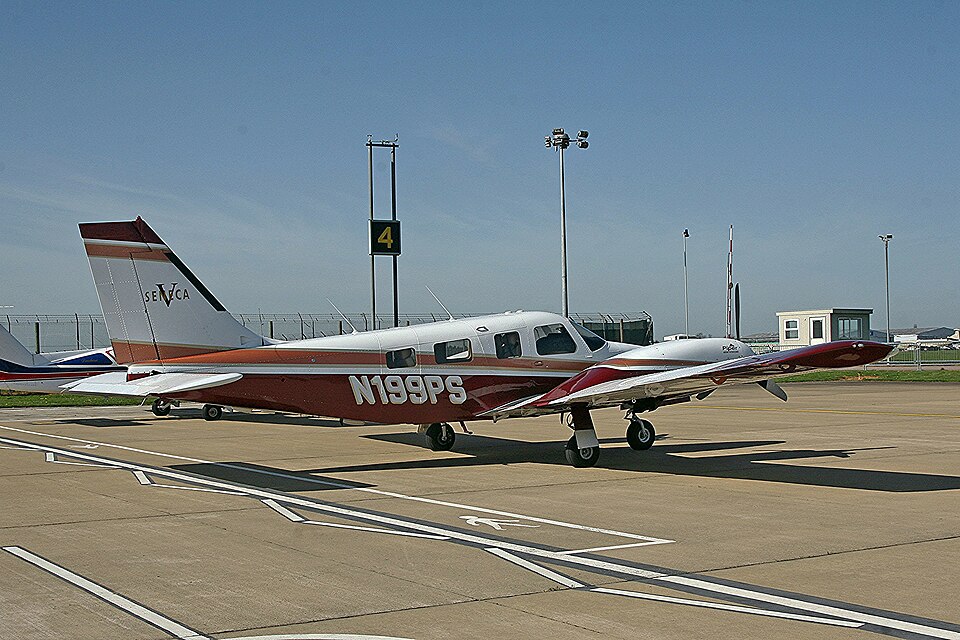
Incident Overview
On 27 September 2011, at 1705 UTC, a Piper PA-34 Seneca V (registration N199PS) operated by a private pilot was landing at Bembridge Airport, Isle of Wight, for the first time. The aircraft, manufactured in 1999, was powered by two Continental Motors Corp LTSIO-360-RB piston engines. The pilot held a Private Pilot’s Licence with 520 hours total flying experience, including 66 hours on type. The flight carried one pilot and five passengers.
Sequence of Events
During the approach to Runway 12, the aircraft bounced upon touchdown, which surprised the pilot. A second, harder bounce occurred before the pilot initiated a go-around. The second approach and landing were smooth. After shutting down the engines, the pilot noticed damage to the tips of the right propeller. An engineer later identified a crease in the right wing. The repair agency found no evidence of pre-existing conditions that could have weakened the damaged area.
Contributing Factors
The pilot reported that several passengers experienced airsickness and vomited during the flight, which he considered a distraction. He stated that this distraction may have contributed to his reluctance to execute a go-around after the first bounce. Additionally, the pilot noted that the runway had a downward slope not mentioned in his airfield reference materials, including a popular airfield guide and the local gliding club website. He believed this unexpected slope contributed to the event, though he did not consider it causal. The aircraft’s weight and balance were within landing limits at the time of the incident.