Incident Details
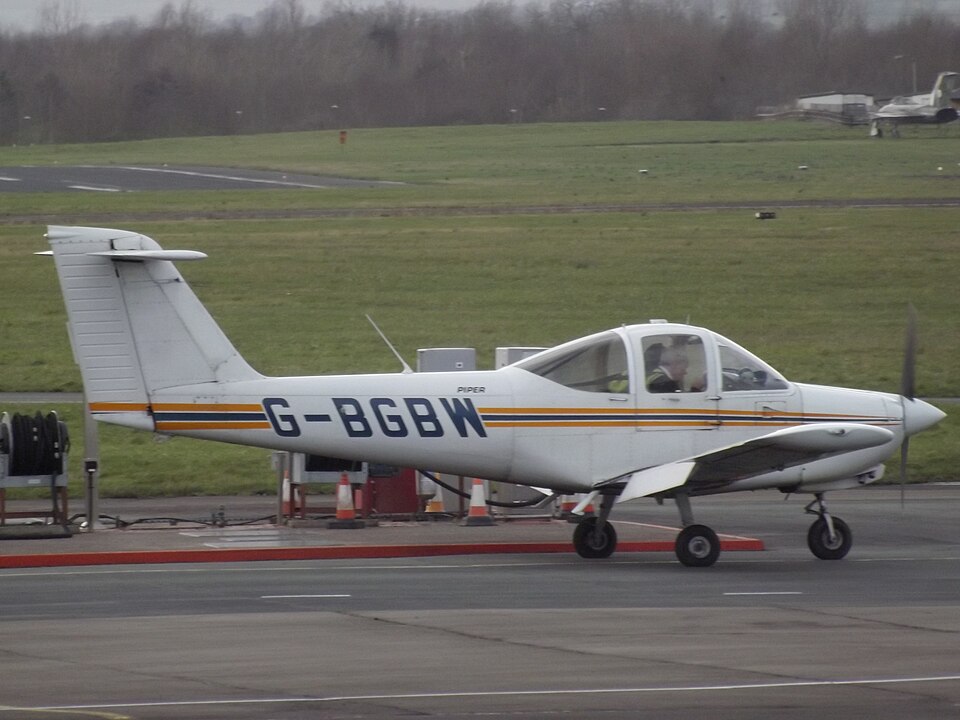
A Piper PA-38-112 (registration G-BGBW) was engaged in visual circuits for private pilot training at Nottingham Airport, Nottinghamshire, on 23 March 1998 at 1455 hrs UTC. The aircraft was flying a base leg at 95 kt and 800 ft agl, piloted by the student. Both the student and the instructor observed a wood pigeon approaching from directly ahead, crossing left to right. Approximately two seconds later, the bird struck the top portion of the windscreen, causing it to break instantly. Large, jagged pieces of perspex remained attached to the frame.
Actions Taken
The instructor assumed control. Noticing that a large piece of perspex was loosely attached at the bottom of the frame and might detach, potentially causing serious injury to the occupants, he instructed the student to reach forward and prevent that piece from dislodging. A MAYDAY call was transmitted, and the aircraft was landed without further incident approximately one minute later.
Examination
Post-flight inspection revealed that two large pieces of perspex had passed between the instructor and the student, coming to rest in the baggage compartment behind them. The bird did not pass through the propeller. The aircraft's windscreen was not required to withstand bird impact per the applicable certification standards for light aeroplanes (BCAR Section K) for aircraft below 2,730 kg, unless classified as agricultural.