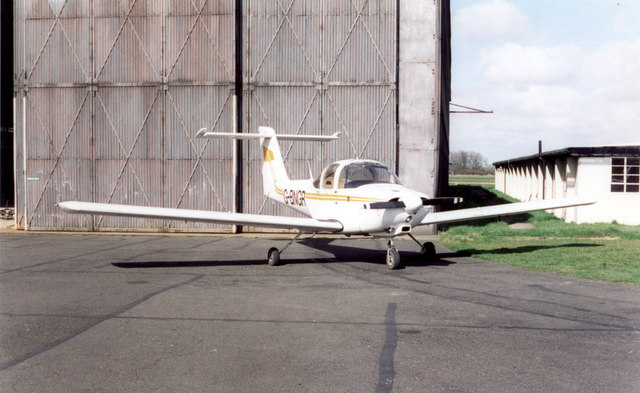
Incident Overview
On 27 August 2001, at approximately 1432 UTC, a Piper PA-38-112 (registration G-BNGR) sustained damage during a landing at Gamston Airfield. The aircraft was being flown by a student pilot on a solo qualifying cross-country flight from Teeside Airport. The pilot was the sole occupant and reported no injuries.
Aircraft and Pilot Information
The aircraft, a single-engine Piper PA-38-112 powered by a Lycoming O-235-L2C engine, was manufactured in 1979. The student pilot, aged 45, held a student pilot license and had accumulated 64 hours of flying experience, all on type, with 10 hours in the last 90 days and 2 hours in the last 28 days.
Sequence of Events
Weather conditions were good, with the surface wind at Gamston reported as 350°/10 knots. The pilot was advised that Runway 03 was in use with a right-hand circuit. After arriving in the Gamston area, the pilot positioned the aircraft on the downwind leg at 1,000 feet above ground level before turning onto the base leg. A descent was initiated on base leg with 21° of flap selected.
Upon turning onto the final approach, the pilot realized the aircraft was too high and further reduced power. The aircraft touched down on the main wheels approximately halfway along the runway and bounced. The pilot continued to attempt the landing, resulting in three or four additional bounces. During the final bounce, the nose landing gear collapsed. The aircraft came to rest on the right side of the runway.
Damage
The nose landing gear, propeller, and engine sustained damage.
Pilot's Assessment
The pilot assessed that the turn from downwind to base leg had been made too early, causing the aircraft to be higher and closer to the runway than usual. The subsequent corrective actions resulted in a steep descent with low power, which led to a bounce during the attempted flare.