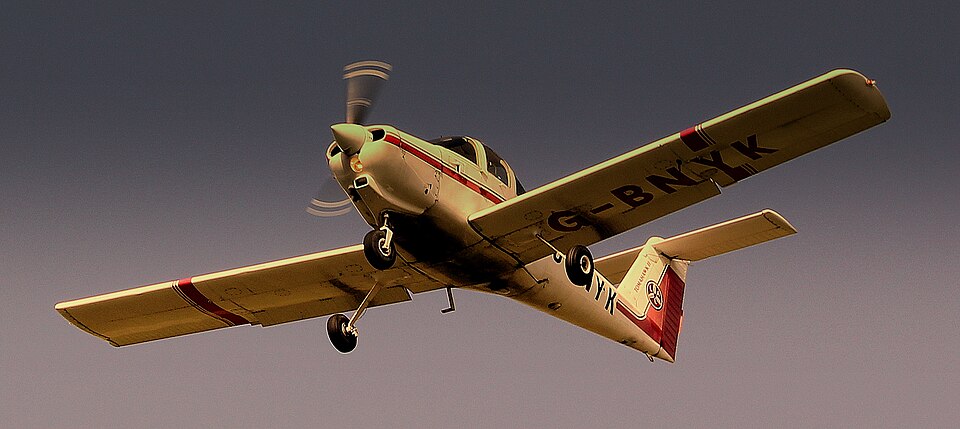
Incident
On 4 May 2004, a Piper PA-38-112 Tomahawk (registration G-BNYK) sustained nose wheel damage during a solo landing at Full Sutton Airfield in South Yorkshire. The aircraft was being used for training, with a student pilot operating under supervision. The pilot had accumulated 19 hours of flying experience, of which 13 were on the same type.
Flight Details
Before the incident, the student pilot completed five uneventful dual circuits with an instructor. The instructor then suggested a solo circuit, and the pilot agreed, feeling it was within his capabilities. The instructor disembarked to observe from the ground. Weather conditions were fine with nil wind.
Landing Sequence
The takeoff, circuit, and approach were satisfactory. As the aircraft crossed the displaced threshold of Runway 22, the pilot reduced power to idle and began the flare. The aircraft landed heavily and bounced. The pilot considered the first bounce similar to previous experiences and continued the landing. A second, more violent bounce followed, then additional bounces. The aircraft came to rest just off the right side of the runway, with the nose and right main wheel in a ploughed field.
Damage and Aftermath
The pilot was uninjured and exited the aircraft. The nosewheel fork was bent and the oleo had collapsed, but the engine and propeller appeared undamaged. The pilot reported that he believed the cause was initiating the flare too late and not maintaining control, allowing the nose to drop after the first bounce. With hindsight, he felt a go-around should have been performed. He later completed a satisfactory circuit with the instructor in another aircraft.
The instructor agreed with the pilot's account, noting that the initial landing appeared heavier than normal and that the bounces might have been aggravated by pilot-induced oscillations.
Probable Cause
The pilot believed the accident was caused by initiating the flare too late and not maintaining control after the first bounce, allowing the nose to drop.