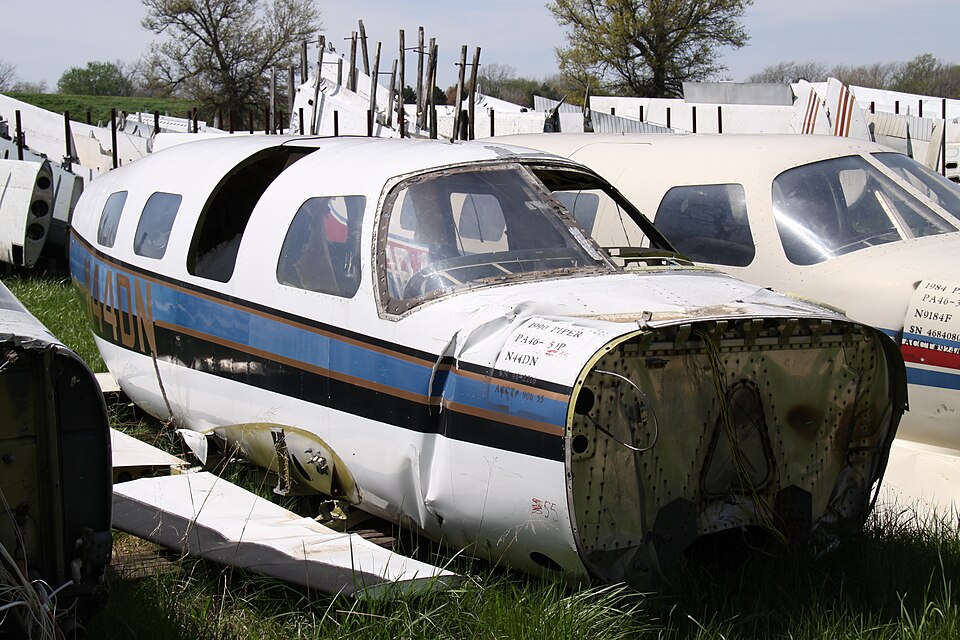
Flight Details
The aircraft was undergoing a shakedown flight after completing a 100-hour maintenance inspection and other engineering work at Bournemouth Airport. The pilot, who was not the owner, had been requested to carry out the flight. No technical log was available to indicate the quantity of fuel remaining on board or the aircraft's previous refueling and flight history.
Fuel Management
The pilot recalled that the fuel tank gauges indicated 22 US gallons in the left wing and 40 US gallons in the right wing, totaling 62 US gallons. The Aircraft Flight Manual specifies a maximum allowable lateral fuel imbalance of 10 US gallons. The aircraft started up at 1448 hrs and taxied for departure from Runway 26. The right tank was selected for takeoff and the initial portion of the flight.
Engine Failure and Forced Landing
The aircraft climbed to FL180, and required engine checks were completed. During the turn to return to Bournemouth, the right fuel quantity indicator dropped to zero. The pilot was not initially concerned, as the left tank had been used only during part of the taxi. A digital fuel endurance indicator showed one hour of fuel remaining. Descent was initiated, and the aircraft was transferred to Bournemouth Approach for radar vectoring to an ILS approach to Runway 08. The pilot noted fluctuations in fuel flow and RPM indicators, prompting selection of the left tank. While established on the localizer at 25 nautical miles and descending to 3,000 feet, the engine again fluctuated at about ten miles from touchdown. Switching to the right tank did not restore power; reselecting the left tank briefly restored power before the engine failed again. The pilot turned left off the ILS and identified a suitable field for a forced landing. The aircraft touched down in an open field with an uphill gradient further in than desired. The landing was smooth, but the aircraft could not stop before hitting the far boundary hedge. The left wing was severely damaged. No fire occurred, and the three occupants vacated the aircraft via normal means, sustaining only minor injuries.
Investigation Findings
ATC records traced the aircraft's movements. The aircraft, piloted by its owner, had flown from Rome-Ciampino to Southend on 21 June 2000. It was refueled to full tanks (326 liters of Avgas 100LL) on 23 June before departing for Bournemouth. Subsequently, it operated four sectors between Bournemouth and Exeter from 23 to 25 June, totaling 1 hour 47 minutes airborne. The aircraft then underwent maintenance until the accident flight. The digital fuel endurance indicator required resetting at refueling; the owner had reset it but noted it was not intended to monitor ground operations. Total tank capacity was 455 liters (120 US gallons). Cruise fuel flow was about 69 liters per hour (18 US gallons per hour) at 20,000 feet. From the movement history, the aircraft had been airborne for 2.72 hours, consuming at least 188 liters, leaving 267 liters (70 US gallons) of that fuel. Additional consumption occurred during taxi on ten occasions and an engine run of at least 30 minutes during maintenance, totaling over 1.5 hours. The owner estimated 96 US gallons consumed on the five sectors after refueling. Thus, the aircraft likely had considerably less than the pilot's recollection of 62 US gallons on departure.