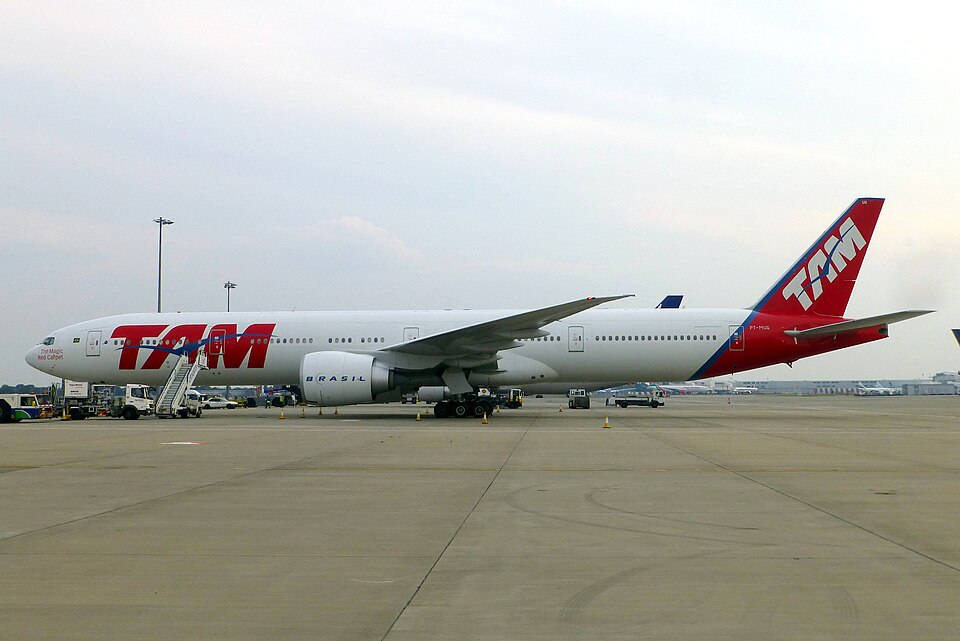
Incorrect takeoff weight data leads to tail strike on Boeing 777

Casualties unknown • Aeroporto Milano Malpensa, IT

A Boeing 777-300ER experienced a tail strike during takeoff at Milan Malpensa after the crew entered takeoff performance data for a significantly lower weight than the actual aircraft mass.

What happened

On July 9, 2024, a Boeing 777-300ER, registration PT-MUG, was preparing for takeoff from runway 35L at Milan Malpensa Airport. During the takeoff roll, the aircraft experienced a tail strike. The aircraft's pitch stabilized at approximately 8.3 degrees as the tail strike protection system activated.

The pilot flying was unable to abort the takeoff due to the aircraft's speed and configuration, and the aircraft did not respond to the takeoff inputs as expected. The pilot flying applied TOGA thrust approximately eight seconds after the onset of the tail strike. The aircraft continued the takeoff, passing the runway threshold at an altitude of approximately 155 feet. Following the event, the crew declared an emergency (PAN, PAN) and coordinated with air traffic control to perform a fuel dump, discharging approximately 72 tonnes of fuel. The aircraft landed safely on runway 35R about 70 minutes later.

The investigation

The ANSV investigation focused on the discrepancy between the takeoff performance parameters entered into the Flight Management System (FMS) and the actual weight of the aircraft. The investigation established that the crew entered takeoff performance data—including rotation speed and engine thrust settings—calculated for a takeoff weight significantly lower than the aircraft's actual weight. Specifically, the entered rotation speed was 149 knots, whereas the appropriate speed for the actual weight should have been 181 knots.

Investigators found that the crew did not recognize the significance of the "V-SPEEDS UNAVAILABLE" message on the FMS, which would have indicated that the computed speeds were not being displayed. Furthermore, the investigation noted that the FMS allowed the entry of inconsistent takeoff speeds relative to the entered takeoff weight. The investigation also examined the crew's departure from standard procedures, as they had opted to perform individual performance calculations rather than following a unified verification process.

Findings

  • The primary cause of the tail strike was a rotation at a speed significantly lower than required for the aircraft's actual weight.
  • The crew entered takeoff performance data into the FMS based on a much lower estimated takeoff weight than the actual mass of the aircraft.
  • The crew failed to understand the implications of the "V-SPEEDS UNAVAILABLE" message, which could have served as a warning of data inconsistency.
  • There was a lack of simultaneous verification of takeoff weights across the final load sheet, the Electronic Flight Bag (EFB), and the FMS.
  • The aircraft lacked automated systems, such as an On-Board Weight and Balance System (OBWBS) or a Takeoff Performance Monitoring System (TOPMS), which could have detected the error.
  • The crew deviated from standard procedures by performing individual performance computations.

Probable cause

The tail strike was caused by rotating at a speed far below the necessary threshold for the aircraft's actual weight, resulting from the crew entering incorrect, lower-weight performance parameters into the FMS.

Frequently asked questions

What happened in the 2024-07-09 Boeing B777-300ER accident near Aeroporto Milano Malpensa, IT?

A Boeing 777-300ER experienced a tail strike during takeoff at Milan Malpensa after the crew entered takeoff performance data for a significantly lower weight than the actual aircraft mass.

What aircraft was involved and where did it happen?

The accident on 2024-07-09 involved a Boeing B777-300ER, registration PT-MUG, at Aeroporto Milano Malpensa, IT.

What was the probable cause of the accident?

The tail strike was caused by rotating at a speed far below the necessary threshold for the aircraft's actual weight, resulting from the crew entering incorrect, lower-weight performance parameters into the FMS.

Loading the flight search…