History of the Flight
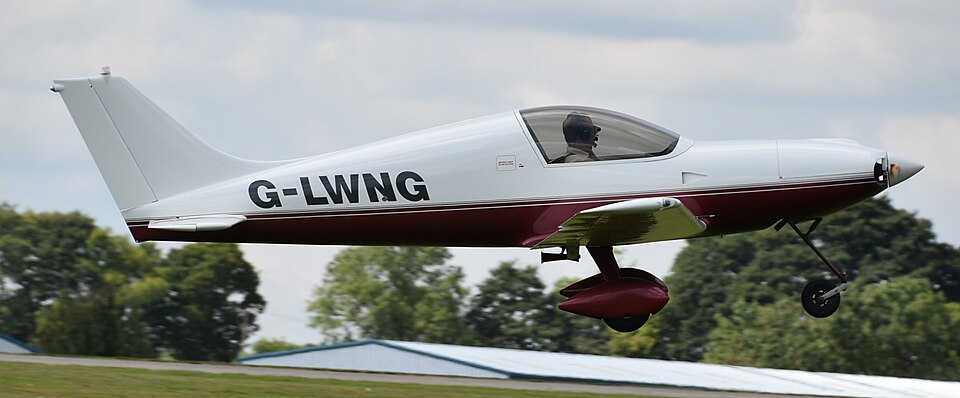
The aircraft, a Pulsar registered G-LWNG, departed Wellesbourne Airfield in good weather conditions with a light north-easterly wind of 5-7 kt. The pilot, who held a Private Pilot's Licence with 1,271 hours total flying experience (11 hours on type), intended to land at Grove Farm Airstrip in Leicestershire. After letting down into a right-hand circuit for Runway 29, the pilot decided to overfly the runway to assess the surface condition, as he had never landed there before.
On the next approach, the pilot stated that in order to land at the start of the 350 m runway, he cut the power a little early, which resulted in the aircraft touching down in the field before the runway. The surface was level, with a short crop and no discernible boundary between the field and the runway. However, as the aircraft rolled onto the runway, the pilot felt a sharp jolt. He continued to taxi the aircraft to the hangars where, after shutting down, he discovered that the nose landing gear strut was bent and the lower engine cowling was distorted in the region of the attachments of the lateral engine supports.
Post-Accident Inspection
The pilot subsequently inspected the area in which he had touched down and discovered that a ridge of soft soil approximately 150 mm high ran across half the runway width at the 29 threshold. The remaining half of the threshold was level with the field. The pilot had not seen the ridge prior to his touchdown in the undershoot area.
Aircraft Information
The aircraft was a Pulsar, manufactured in 1992 (Serial no: PFA 202-11866), powered by one Rotax 582 piston engine. The pilot was the sole occupant and reported no injuries. Damage was limited to the nosewheel strut and engine support mount.
Flying Experience
The commander, aged 72 years, had accumulated 1,271 flying hours, of which 11 hours were on type. In the last 90 days, he had flown 4 hours, and in the last 28 days, 0.7 hours.