Paraglider Crash in Puente Alto Injures Pilot and Passenger
A SkyWalk Join't 3 paraglider crashed into the ground near Las Vizcachas, Chile, on September 1, 2024. The pilot and passenger sustained serious spinal…
On November 23, 2001, a PZL-Mielec AN-28 (registration ES-NOV) operated by Enimex was involved in an aviation accident near Kärdla, Estonia during landing or approach. 2 people were killed. Investigators recorded the probable cause as: The accident was the consequence of an incorrect assessment of the situation by the commander of the aircraft during the approach, which resulted in errors in the piloting techniques, including transition from intense icing conditions to active descent with a… This summary draws on records from the Bureau of Aircraft Accidents Archives (B3A).
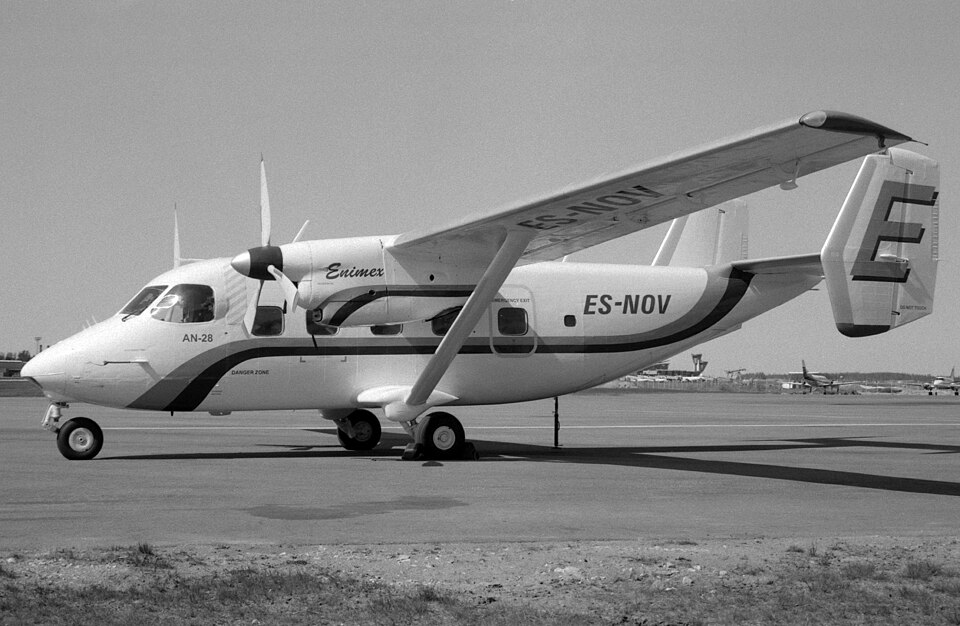
An aircraft crashed into trees 1,500 m short of the runway at Kärdla Airport while on approach from Tallinn, killing two passengers and injuring 15 others.
The accident was the consequence of an incorrect assessment of the situation by the commander of the aircraft during the approach, which resulted in errors in the piloting techniques, including transition from intense icing conditions to active descent with a transition from the originally planned instrument approach to a visual approach; failure to take into account the possibility of complex meteorological conditions in preparation for the approach and during the approach, with the crew not considering the possibility of going around or returning to the point of departure; and maintaining an unjustified low airspeed and high vertical descent speed during an approach with poor altitude control. Associated factors included difficult weather conditions due to severe icing conditions; reassessment by the aircraft commander of his knowledge and experience in controlling the An-28 aircraft in adverse weather conditions; failure to comply with the requirements of the Airplane Flight Manual of the An-28 aircraft for the operation of aircraft systems and crew resource management; failure to comply with the Airplane Flight Manual in terms of timely termination of the approach and transition to climb; the copilot, taking into account the large flying experience of the aircraft commander and overestimating his flight and navigation skills, behaved passively and did not provide him with adequate assistance in difficult conditions during the approach; transition from an instrument approach to a visual approach without ATC clearance; and the lack of visual assessment of the angle of the descent trajectory (PAPI system) on the runway.
A SkyWalk Join't 3 paraglider crashed into the ground near Las Vizcachas, Chile, on September 1, 2024. The pilot and passenger sustained serious spinal…
A Cessna 172N struck electrical cables while on final approach to land at Aucó Aerodrome in Chile. The pilot was uninjured, but the aircraft sustained damage…
A Bombardier DHC-8-402 suffered a tail strike during landing at Puerto Williams on September 9, 2024. All 76 occupants were unharmed, but the aircraft…
A MYD JS-MD 3 glider veered off the runway and struck a wall at Vitacura Aerodrome on January 6, 2025. The pilot was uninjured, but the aircraft sustained…
A recreational paraglider flight in Puchuncaví, Chile, ended with the pilot sustaining serious injuries after a rapid descent and impact with a hillside on…
A Tecnam P2006T landed on its belly at an aerodrome in Poland after the crew failed to confirm landing gear deployment. The incident resulted in no injuries…