History of the Flight
The aircraft, a Raytheon 390 Premier 1 (N200PR), departed Luton Airport for a planned flight to Humberside, then to Dublin with six passengers. After takeoff from Humberside, the pilot selected the landing gear to retract, but the landing gear remained extended with three green lights illuminated. Attempts to recycle the gear failed, and the pilot observed LIFT DUMP FAIL and ANTI SKID FAIL indications. Due to insufficient fuel to continue with gear extended, the pilot diverted to Farnborough, where engineers from the aircraft's maintenance organisation (based at Blackbushe) were arranged to meet the aircraft.
During the approach to Farnborough, the pilot used the abnormal checklist for LIFT DUMP FAIL, noting a 53% increase in landing distance. He landed with Flap 30° and the anti-skid switch left ON. After touchdown, lift dump spoilers did not deploy, but braking seemed effective. An engineer performed a visual inspection of the weight-on-wheels (WOW) switches and ran built-in tests, which revealed no faults. The engineer, aware of prior lift dump issues, suggested ferrying the aircraft to Blackbushe for further investigation. The pilot agreed and completed the short flight without retracting the gear.
Accident Landing
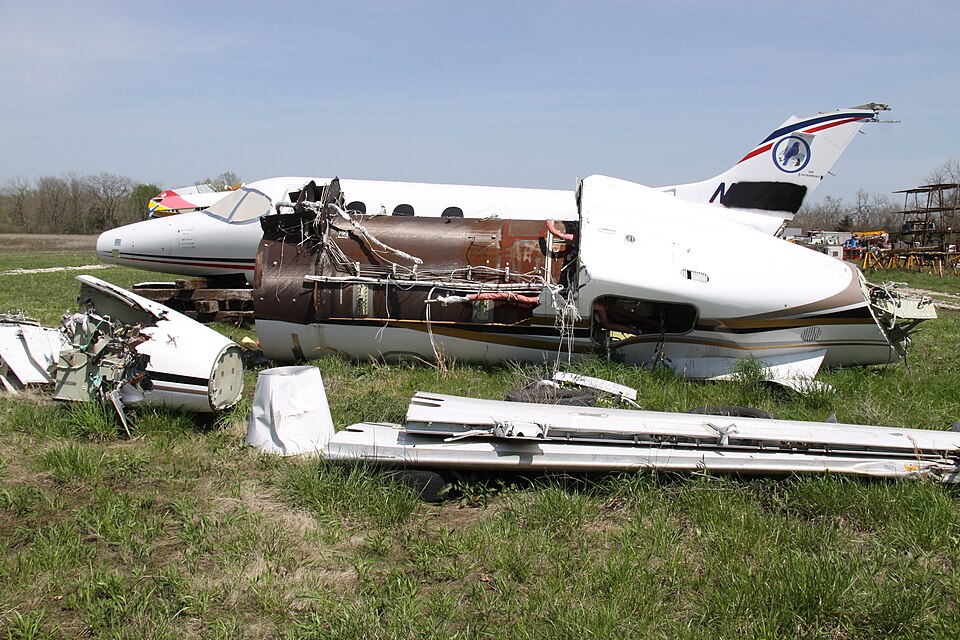
After an uneventful takeoff from Farnborough, the pilot again noticed LIFT DUMP FAIL indication. He did not refer to the checklist again, expecting the failure. During the approach to Blackbushe Runway 26, the pilot landed approximately 100 m beyond the displaced threshold. Applying brakes, he felt no retardation; he released and reapplied brakes with no effect. He attempted a go-around, but engine response felt slow and insufficient runway remained. He closed the thrust levers and reapplied brakes, still without effective braking. He steered off the runway onto grass. The aircraft yawed left, skidded sideways across a taxiway, struck an embankment, and came to rest with wings detached. There was no fire. The pilot escaped via the emergency exit after shutting down systems.
Post-Accident Examination
Examination of the runway revealed tyre marks beginning about 580 m from the threshold, matching the main gear track. The aircraft veered left, crossed soft ground, and the nose gear fractured. The right wing contacted a fuel bund embankment. The support bracket for the right main landing gear weight-on-wheels switch was found to have sustained a pre-impact failure, which accounted for the earlier indications.