History of the Flight
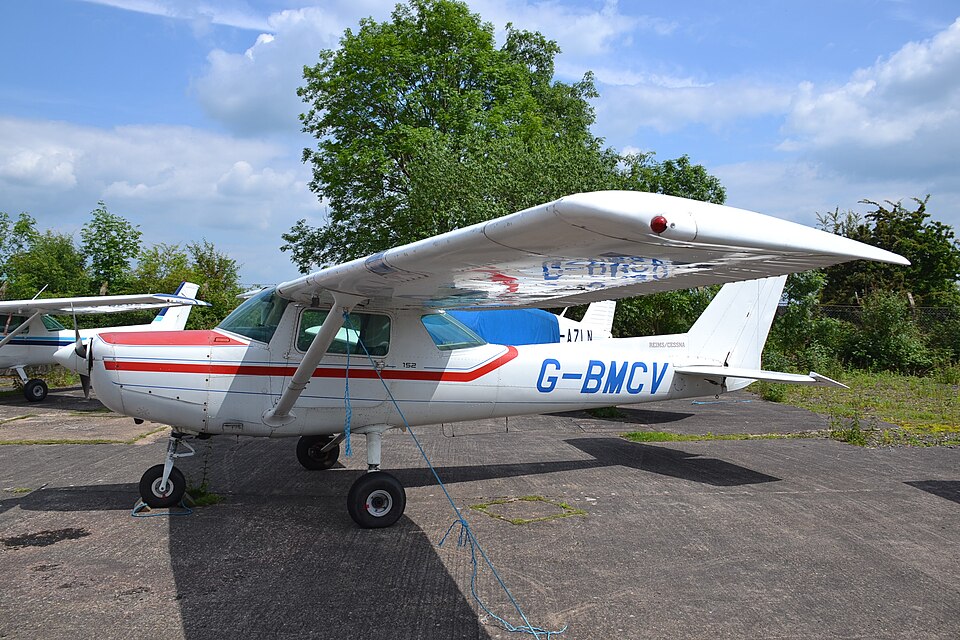
On 24 August 2006, at approximately 1310 UTC, a Reims Cessna F152 (registration G-BMCV) operated as a solo VFR navigation training flight from Leicester Airport. The student pilot, aged 18 with 32 hours of total flying experience (all on type), conducted pre-flight checks and took off normally. While climbing to the overhead position at around 2,000 ft, the engine lost power. The pilot noticed a decrease in engine noise and a drop in indicated rpm, and the aircraft stopped climbing. Despite the throttle being fully open, power continued to diminish. The pilot declared a MAYDAY and executed a forced landing onto the runway, touching down well beyond the threshold. The aircraft overshot the end of the runway and came to rest in an adjacent field. The pilot reported no injuries. Damage was sustained to the propeller and right wing.
Engine Examination
The engine, a Lycoming O-235-N2C piston engine (serial No L-20058-15), was dismantled and inspected by the overhaul agency. The power loss was attributed to the failure of the No 4 exhaust cam follower, whose head had broken away from its shaft and was found in several pieces in the oil sump. Consequential damage to the engine resulted from debris circulating in the oil. The cam follower head had fractured into seven pieces; many showed evidence of flexural fatigue from loads applied by the associated cam lobe. One piece, considered the first to separate, contained a fatigue initiation site at the junction between the rim and the cam contact face. The camshaft surface of the rear lobe (No 4) had been mechanically damaged. Other lobes displayed offset wear, indicating that the camshaft had not been sitting squarely relative to the related cam follower head for a considerable period of engine operation. Microsection examination of the camshaft material revealed carburisation and case-hardening before final machining, with satisfactory microhardness tests. The crankcase showed no visual distortion but had mechanical damage on the right side consistent with high-energy contact from cam follower pieces. Camshaft bearing faces on both crankcase sides were scored, likely from debris in the oil, as were the bearing lands on the camshaft.
Engine History
The engine had accumulated 1,293 hours and 5 minutes since its last overhaul in February 2003, at which time a new camshaft was fitted. In September 2005, following reported tightness of the crankshaft when rotated by hand, the engine was removed from G-BMCV. It was dismantled, and the crankcase was found to be fretted. The crankcase was replaced with an overhauled component, and the engine was reassembled. Since that rebuild in 2005, the engine had operated for 396 hours and 15 minutes.
Discussion
The investigation concluded that the break-up of the cam follower resulted from a flexural fatigue mechanism caused by offset cyclic loading from the related camshaft lobe. No conclusion could be made about the cause of the offset loading.