Synopsis
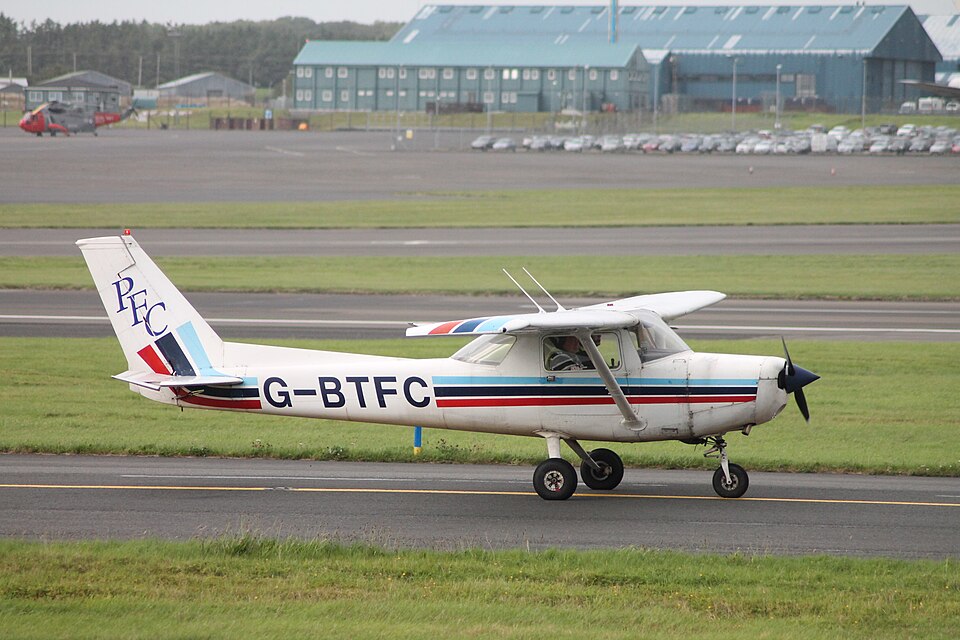
The aircraft, a Reims Cessna F152 registered G-BTFC, bounced on its main wheels during landing at Bute Airfield, Kingarth, Isle of Bute. The pilot considered a go-around necessary. During the subsequent ground roll, the nose gear struck the grass runway in an area with a significant upslope, causing the nose gear leg to fold back under the fuselage. The propeller was damaged. Neither the pilot nor the passenger sustained serious injuries; the passenger had a minor bruise to his left knee.
History of the Flight
The pilot, who held a National Private Pilot’s Licence and had a total of 232 flying hours (18 on type), had landed at Bute on eight previous occasions. The weather conditions were a light south-westerly breeze, 15 km visibility, and no significant weather. The pilot elected to land on Runway 27. During the first approach, he initiated a go-around when he realised he was likely to land long. On the second approach, the aircraft bounced on its main wheels on landing, but not excessively. The nose gear struck the runway, folded back, and the aircraft slid to a halt. The pilot then switched off the fuel, master switches, and magnetos, and both occupants exited through the left and right doors respectively.
Airfield Information
Bute Airfield has a grass strip 480 metres in length, aligned 09/27. Aircraft landing on Runway 27 typically make a fairly steep approach through a gap cut in the woods, which was made approximately 10 years ago and is about 100 metres wide. Trees mask much of the road along the eastern edge, so pilots must consider the possibility of high-sided vehicles. Runway 27 initially slopes downhill, then rises, and slopes down again before the end.
Injuries and Damage
The passenger sustained a bruise to his left knee; the pilot was uninjured. The aircraft sustained damage to the nose gear and propeller.
Contributory Factors
The pilot considered that, with hindsight, he should have commenced a go-around after the first bounce on the main wheels. He identified the steep approach, short runway length, lack of significant headwind, and the downhill slope at the start of the runway as contributory factors.