Accident Details
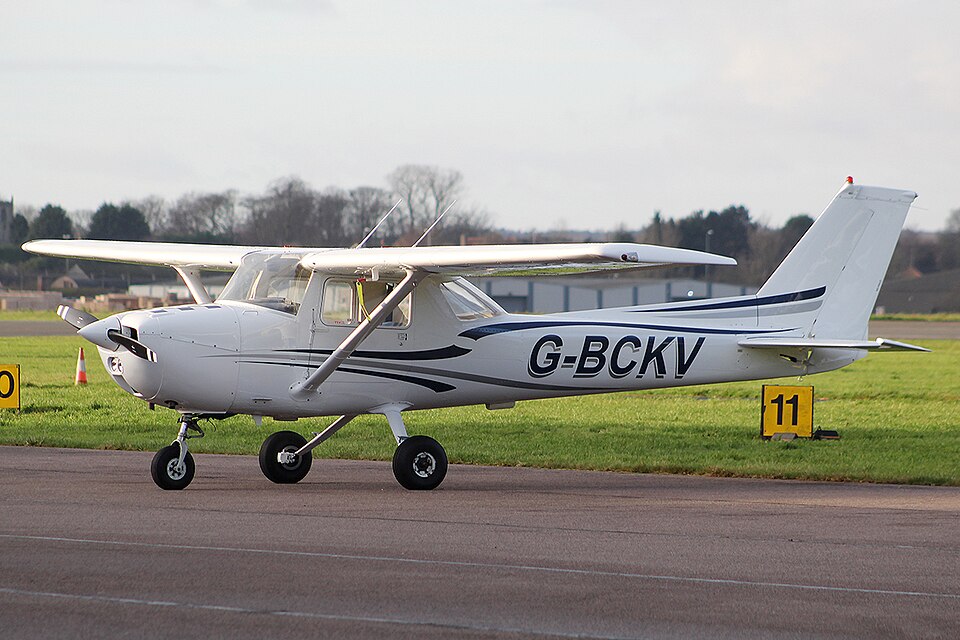
On 20 January 2011 at 1555 UTC, a Reims Cessna FRA150L Aerobat, registration G-BCKV, sustained damage during a runway overrun at Netherthorpe Airfield, Yorkshire. The aircraft, manufactured in 1974 and powered by a single Continental Motors Corp O-240-A piston engine, was being operated on a training flight with one student pilot on board. There were no passengers. The pilot was uninjured, and no fire occurred.
Sequence of Events
The student pilot had completed eight hours of solo flying, including circuits. After flying in the local area for 30 minutes, he returned to Netherthorpe, where weather conditions were good with light winds and CAVOK. While turning onto final approach at approximately 500 ft, the pilot realized that the sun was ahead and low on the horizon. He was not wearing sunglasses, and the aircraft's sun visor was ineffective in reducing the glare. Despite the impaired visibility, he elected to continue the approach. The pilot touched down about halfway along the 553 m grass Runway 24, but his actual touchdown point was towards the end of the runway. Full braking was applied, but the aircraft overran the runway and struck a hedge.
Damage
The accident resulted in damage to the propeller, nose landing gear, cowling, and the leading edge of one wing.
Pilot Information
The commander was a 50-year-old student pilot with a total flying experience of 34 hours, all on the accident aircraft type. In the last 90 days, he had flown 17 hours, and in the last 28 days, 7 hours.
Post-Accident Actions
The student's instructor noted that the student had been trained to execute a go-around in such circumstances. Following the accident, additional training and confidence-building in go-around procedures were conducted.