Incident Overview
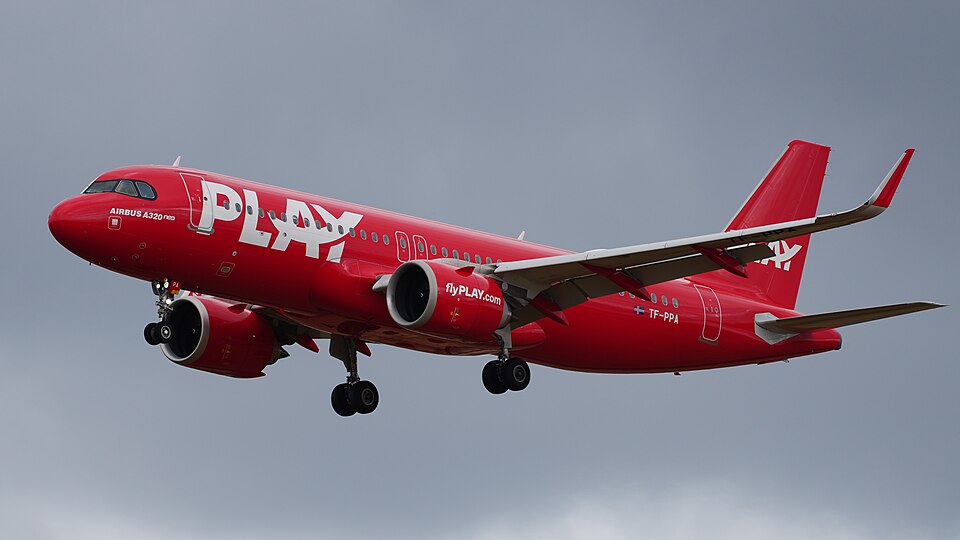
On 13 June 2022, an Airbus A320-251N, registration TF-PPA, declared an emergency while en route from Malaga, Spain, to Keflavik, Iceland. The aircraft was operating a scheduled commercial passenger flight with 6 crew and 118 passengers on board. No injuries or damage were reported. The incident occurred due to uncertainty regarding fuel availability after a series of ECAM advisory messages and indications of abnormal fuel transfer valve status.
Flight and Fuel Management
The minimum required fuel for the trip was 11,487 kg. The flight crew decided to depart with 11,780 kg to include the option of using Egilsstaðir and Akureyri airports as alternates. The flight departed Malaga at 21:13 UTC and reached cruising altitude FL380 at 21:35. The initial part of the flight was normal.
ECAM Messages and Crew Actions
At 22:26, while the aircraft was about to enter oceanic airspace, a cabin crew member entered the flight deck, moved the observer seat from its stowed position, and sat down. Shortly thereafter, the ECAM system displayed seven advisory messages: Autopilot OFF, Auto flight FAC 2 Fault, Auto flight FCU 2 Fault, Air conditioner control 2B Fault, Cabin pressure system 2 Fault, Fuel FQI channel 2 Fault, and Brake system 2 Fault. The pilots discussed and cleared the messages, deciding to continue the flight.
At 22:36, ATC instructed a descent from FL380 to FL320, unrelated to the messages. During fuel checks, the flight crew noticed a hollow amber triangle on the ECAM fuel page, indicating that the transfer valves from the outer wing tanks to the inner wing tanks were in transition. This led to uncertainty about fuel retrieval from the outer tanks. The crew estimated landing fuel would be approximately 300 kg, far below the planned 1,900 kg. They requested a higher flight level, eventually climbing back to FL380, and declared a Pan-Pan situation at 00:45, followed by an emergency declaration at 00:56 with Reykjavik Control.
At 01:15, approximately 25 minutes from landing, the right outer tank fuel quantity began decreasing from 670 kg to 0 kg, followed by the left outer tank at 01:20. The inner tanks increased accordingly. The crew was uncertain whether the valve opening was due to their reset procedures or normal automatic operation. The aircraft landed uneventfully at 01:39 with 2,322 kg total fuel remaining—1,074 kg in the left inner tank and 1,248 kg in the right inner tank. After landing, the same advisory messages reappeared on the ECAM during taxi.
Investigation Findings
The investigation revealed that circuit breaker FIN 6PN, located behind the observer seat on a panel near the first officer, was tripped. This circuit breaker powers busbars 206PP and 208PP, which supply the forward Inter Cell Transfer Valves (ICTVs) and the Fuel Quantity Indicating Computer. The tripping likely occurred when the observer seat was moved from its stowed position, as the seatbelt could reach the circuit breaker and trip it. Functional tests of the circuit breaker found it still functional with no major discrepancies. No fault was found during maintenance that could have caused the trip, and the circuit breaker was replaced.
Airbus has an optional Service Bulletin (SB A320-25-1590) for installing a transparent protection cover on part of panel 123VU, but this cover does not extend to panel 124VU where circuit breaker FIN 6PN is located.
Probable Cause
The investigation determined that the observer seat movement may have tripped circuit breaker FIN 6PN, thereby cutting power to busbar 206PP, which prevented the forward Inter Cell Transfer Valves and Fuel Quantity Indicating Computer from operating normally, leading to fuel transfer uncertainty and the subsequent emergency declaration.