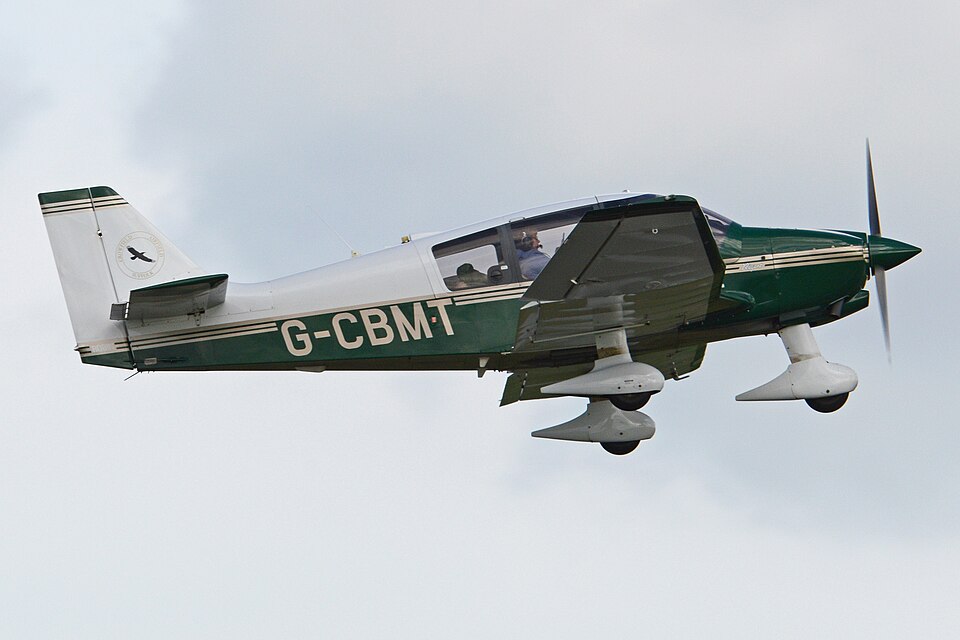
Aircraft and Pilot Information
The aircraft involved was a Robin DR400/180 Regent, registration G-CBMT, manufactured in 2002. It was powered by one Lycoming O-360-A1P piston engine. The pilot, aged 43, held a Private Pilot’s Licence and had accumulated 212 total flying hours, including 20 hours on type. In the previous 90 days, he had flown 4 hours, and in the last 28 days, 2 hours. The flight was private with only the pilot on board; no passengers were carried.
Meteorological Conditions
The weather at the time of the accident was reported as good. Surface wind was from 020° at 14 knots, visibility exceeded 10 km, cloud was broken at 1,100 ft, outside air temperature was 10°C, dew point 7°C, and QNH was 1011 hPa. Runway 10 was in use, measuring 2,752 meters in length and 61 meters in width. The pilot had landed earlier under similar crosswind conditions without difficulty, and the wind was within the aircraft’s demonstrated crosswind limit of 24 knots.
History of the Flight
The pilot had flown the aircraft from Crowfield Airfield in Suffolk to Manston Airport, Kent, that morning. After a few hours on the ground, he taxied to Runway 10 for departure. He selected the first stage of flap for takeoff and aligned the aircraft on the runway centerline. When cleared for takeoff, he smoothly applied takeoff power and the aircraft accelerated, maintaining the centerline. As the aircraft began to lift off, the left wing lifted rapidly, causing the right wing tip to contact the runway surface. The pilot immediately closed the throttle, and the aircraft sank back onto the runway. The nose landing gear then collapsed upon striking the runway, and the propeller contacted the runway, stopping the engine. The aircraft veered to the left, and despite the pilot’s attempts to maintain directional control, it departed the left side of the runway. After the aircraft came to a stop, the pilot isolated the fuel and electrical systems and exited the aircraft normally. The airfield Rescue and Fire Fighting Service responded quickly.
Damage
The damage consisted of the nose landing gear, propeller, engine, and underside of the cowling. No injuries were reported. The pilot believed that a gust of wind from the left had caught the aircraft at the moment of lift-off, which he was unable to counteract. He attributed the loss of directional control to the collapsed nose landing gear.