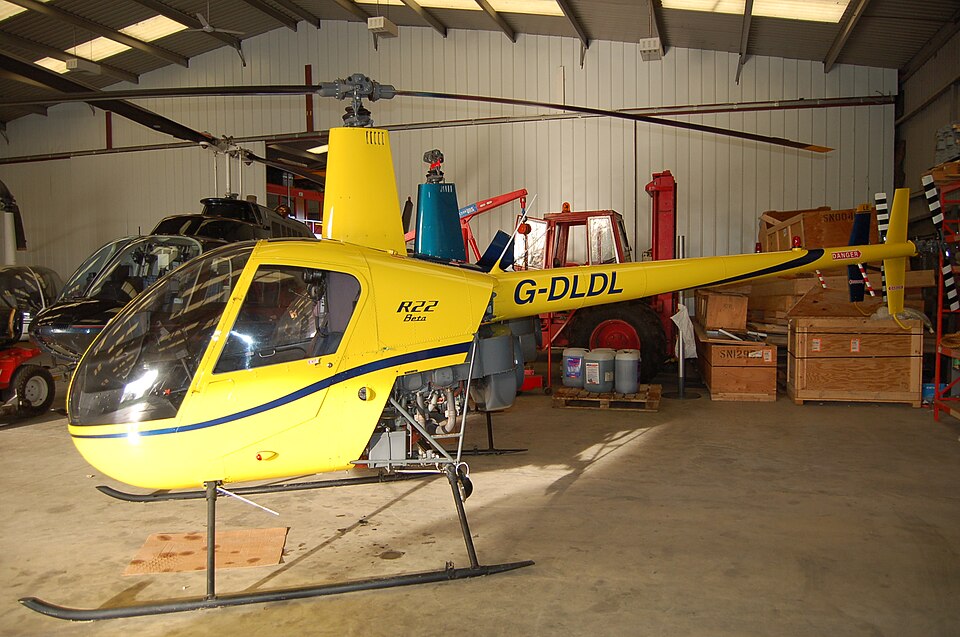
Aircraft and Flight Details
The incident occurred on 16 March 2003, involving a Robinson R22 Beta, registration G-DLDL, equipped with a single Lycoming O-320-B2C engine. The aircraft was on a training flight from Cambridge Airport, with an instructor and a student on board. The instructor held an Airline Transport Pilot's Licence with an Instructor Rating and had accumulated 8,585 total flying hours, including 300 hours on type. The student had approximately 65 hours of flight experience, all on the Robinson R22. The weather was good, with a surface wind from 100° to 110° at 7 to 10 knots. Operations were on Runway 28.
Training Exercise
The instructor briefed the student on the technique for handling an engine failure in a hover. He demonstrated by closing the throttle while hovering into wind over the runway number markings. The instructor then discussed common faults, such as yawing and drifting left, and the tendency to raise the collective lever too early or rapidly. The student expressed readiness to attempt the exercise, and control was handed over with the instructor following through on the controls. The instructor gave a standard warning and closed the throttle.
Incident Sequence
According to the instructor, the student over-controlled by applying excessive right yaw pedal and right cyclic stick, and then raised the collective too rapidly. The instructor intervened, corrected the maneuver, and landed the helicopter. Both the instructor and the student felt the landing was slightly heavy but not excessively so. The exercise was repeated twice more, with improved results.
Post-Flight Inspection
After shutting down the helicopter at the end of the sortie, the instructor noticed slight distortion damage to the lower left side of the main rotor mast fairing. A subsequent inspection by a maintenance organization revealed slight crinkling of the mast fairing and possibly slight main rotor blade deformation.
Student's Reflection
The student later noted that they felt they had over-reacted to the instructor's briefing about common faults during the exercise.