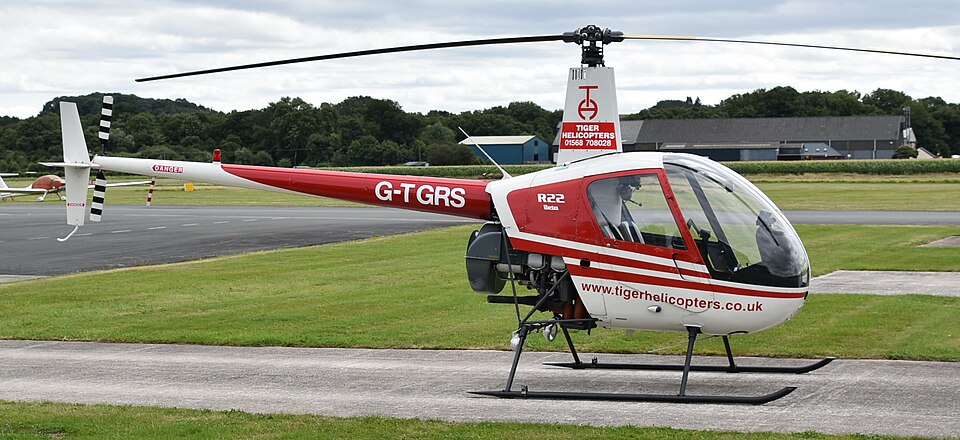
Accident Details
On 18 November 2001 at 1306 UTC, a Robinson R22 BETA helicopter, registration G-TGRS, was involved in an accident at Duxford Airport, Cambridge. The aircraft was conducting a private flight with one pilot and one passenger on board. The helicopter was destroyed in the accident, and both occupants suffered minor injuries.
Sequence of Events
During the landing attempt, the pilot misjudged the altitude of the helicopter above the ground. One of the skids made contact with the ground, causing the helicopter to roll onto its side. The impact tore the rotor head and blades from the mast, leading to the destruction of the aircraft.
Pilot Report
The pilot reported that the misjudgment of height occurred because raindrops on the canopy had impeded his field of view. At the time of the accident, visibility was reported to be 6,000 metres in light rain, with a surface wind from 030° at 5 knots.
Aircraft Information
The Robinson R22 BETA was manufactured in 1989 and was powered by a single Lycoming O-320-B2C engine. The pilot, aged 51, held Private Pilot Licences for both aeroplanes and helicopters. His total flying experience was 202 hours, of which 72 hours were on the accident type. In the previous 90 days he had flown 9 hours, with 5 hours in the last 28 days (2 hours on type).