Incident Overview
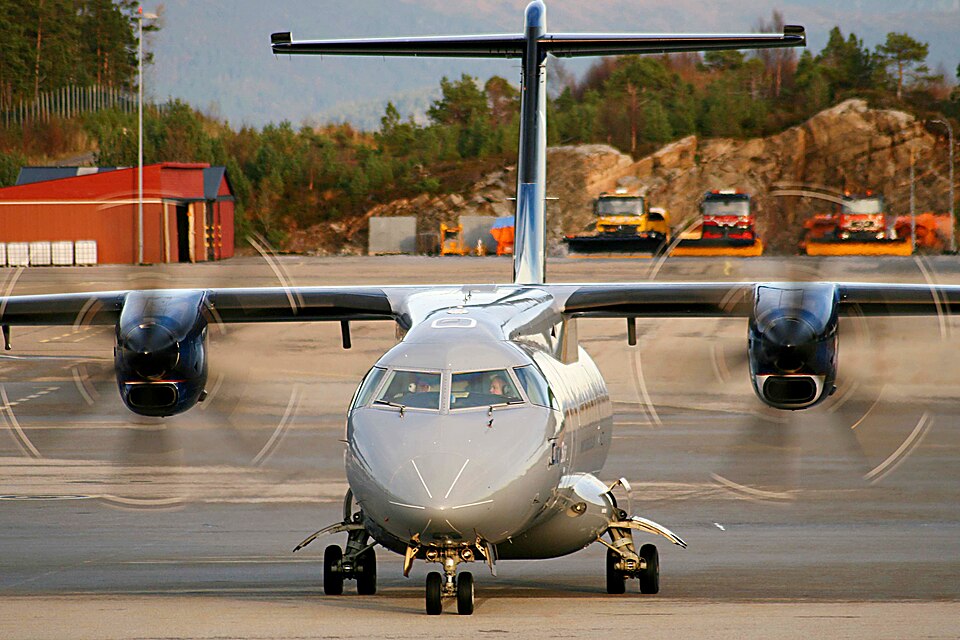
On 22 June 2006 at 1952 UTC, a Dornier 328 Series 100, registration TF-CSB, operated a scheduled passenger flight into Aberdeen Airport. The aircraft was manufactured in 1997 and powered by two Pratt & Whitney 119B turboprop engines. The flight crew comprised three individuals, and there were 16 passengers on board. No injuries were sustained by any occupants, and the aircraft itself was not damaged.
Flight and Landing Sequence
The co-pilot was the pilot flying (PF) for the approach and landing. After a normal touchdown on Runway 34, the co-pilot attempted to release the latches on the power levers to move them rearward from the flight idle position into the beta control range. This action is normally used to assist with aircraft deceleration. The first attempt was unsuccessful; two further attempts also failed.
Commander Takes Control
The commander then assumed control of the aircraft. While applying aggressive braking, he made four additional attempts to release the power lever latches, all of which were unsuccessful. Unable to select beta or reverse thrust, the aircraft continued past the end of Runway 34.
Overrun and Evasive Action
The aircraft traveled approximately 350 meters over rough grass before coming to rest. During the overrun, the commander steered to avoid lighting fixtures and antenna installations. He also attempted to move the condition levers to shut down the engines. Although the uneven terrain and the design of the condition levers made this difficult, he eventually succeeded. The aircraft remained intact, and there was no fire.
Background and Safety Recommendations
The AAIB noted a similar occurrence in 1999 involving a Dornier 328 at Genoa, which was investigated by the Italian Ministry of Infrastructures and Transport. In that event, the aircraft overran the runway and came to rest in the sea, resulting in four fatalities. The Italian report concluded the accident was caused by the pilot being unable to move the power levers from flight idle to ground idle and then to reverse thrust.
As a result of the Aberdeen incident, the AAIB issued Safety Recommendation 2006-104 to Avcraft Aerospace GmbH i.I., the then-current Type Certificate holder, advising them to instruct all Dornier 328 turboprop operators to detail procedures and provide adequate training ensuring pilots can act appropriately if the beta control range cannot be selected after landing. An earlier recommendation had been made to Fairchild Dornier GmbH to define an emergency procedure for such incidents, but the AAIB could not determine if a response was received.
The AAIB continued its engineering evaluation of the power lever gate and latch design in consultation with Avcraft.