Incident Summary
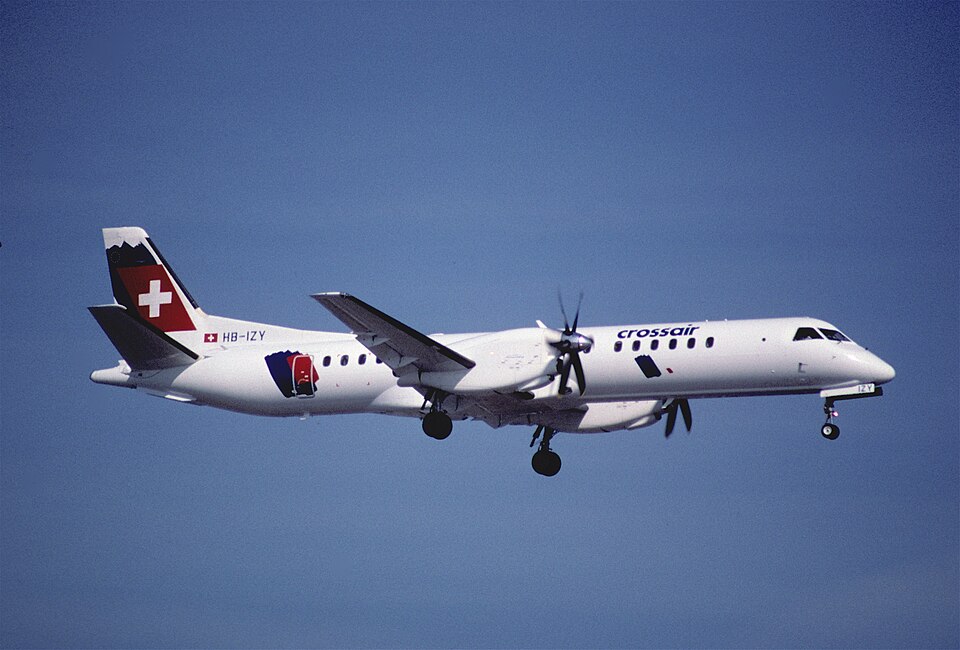
A twin-engine aircraft on a scheduled flight from Basel-EuroAirport to Hamburg was forced to divert due to rapidly deteriorating weather conditions. The crew, unable to land at Hamburg-Fuhlsbüttel Airport because of thunderstorm activity with heavy rain and strong winds, decided to proceed to Bremen. However, weather conditions at Bremen were also too poor for landing, and subsequent attempts to land at Hanover and Berlin-Tegel Airport were unsuccessful.
Flight Details
The aircraft, carrying 16 passengers and four crew members, had departed Basel-EuroAirport en route to Hamburg. As the aircraft descended toward Hamburg, weather conditions worsened significantly. The crew informed air traffic control (ATC) about their low fuel reserve and were vectored to Werneuchen, a former Soviet military airfield located approximately 60 kilometers northeast of Berlin. Werneuchen's unlighted runway measures 2,400 meters in length but lacks approach aids. ATC warned the crew about a one-meter-high earth embankment positioned across the runway, approximately 900 meters past the threshold. This embankment had been constructed to deter unauthorized car racing on the runway, which remained in use for general aviation.
Landing and Impact
Due to limited visibility caused by the poor weather, the crew was unable to see the earth embankment during the landing approach. After touching down, the aircraft impacted the embankment, causing the undercarriage to be torn off. The aircraft slid on its belly for several dozen meters before coming to rest in the middle of the runway.
Aftermath
All 20 occupants evacuated the cabin. Two individuals sustained slight injuries. The aircraft sustained damage beyond repair.
Investigation Findings
The official investigation identified the following findings: the dimension and intensity of the storm front and dynamics of the weather conditions; inadequate use of resources in decision-making during the flight; loss of alternative landing facilities at increasing time pressure; landing of the aircraft outside the operating area of an aerodrome; and collision with the embankment due to non-detection of an obstacle. Systemic causes included inadequate information on weather conditions and development before and during the flight; inadequate information on the Werneuchen Special Airfield due to an ambiguous map display as well as misleading or lack of communication; and inadequate labeling or marking of the operational and non-operational areas of the airport.