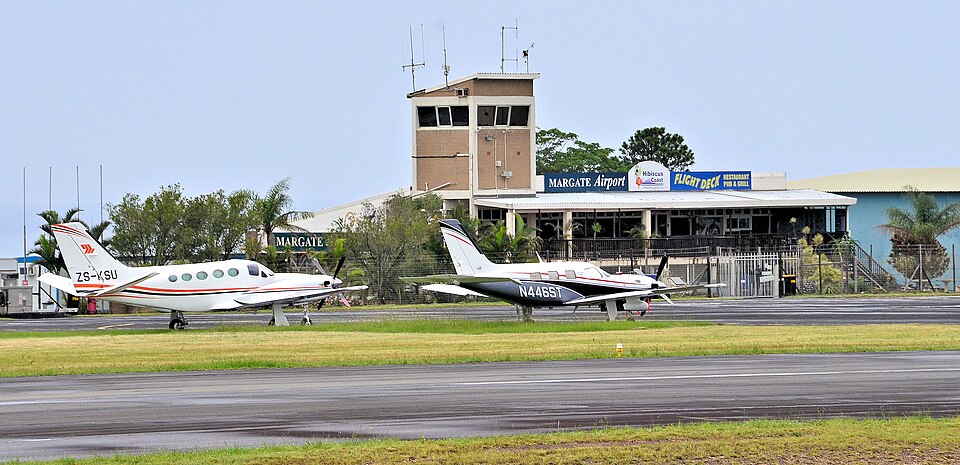
Incident
On 3 November 2000 at 0900 Z, a Cessna 425 (registration ZS-KSU) was on a private flight from Zimbabwe to Lanseria. While on base leg for runway 06 Left at Lanseria aerodrome, the left-hand engine failed catastrophically, causing an in-flight engine fire. The aircraft was successfully landed, and Lanseria fire personnel extinguished the fire. Fire damage was limited to the engine, and no injuries were sustained. The aircraft had one pilot and three passengers on board.
Examination
The engine was removed and dismantled at an approved maintenance facility on 6 November 2000. External inspection revealed that the power turbine (free turbine) partially shed a number of its blades, which were subsequently expelled through the exhaust. One of the scavenge pump oil return lines was punctured in the process. Further examination of engine components revealed that one of the three planet gears in the first stage reduction gearbox had failed, resulting in seizure of the gearbox.
Probable Cause
It is uncertain whether cavitation erosion was the primary cause for the seizure of the said sleeve bearing or whether it was simply a contributory factor. It is possible that the bearing became dislodged from its press-fitted position and started rotating with the shaft, causing bearing failure.