Incident Overview
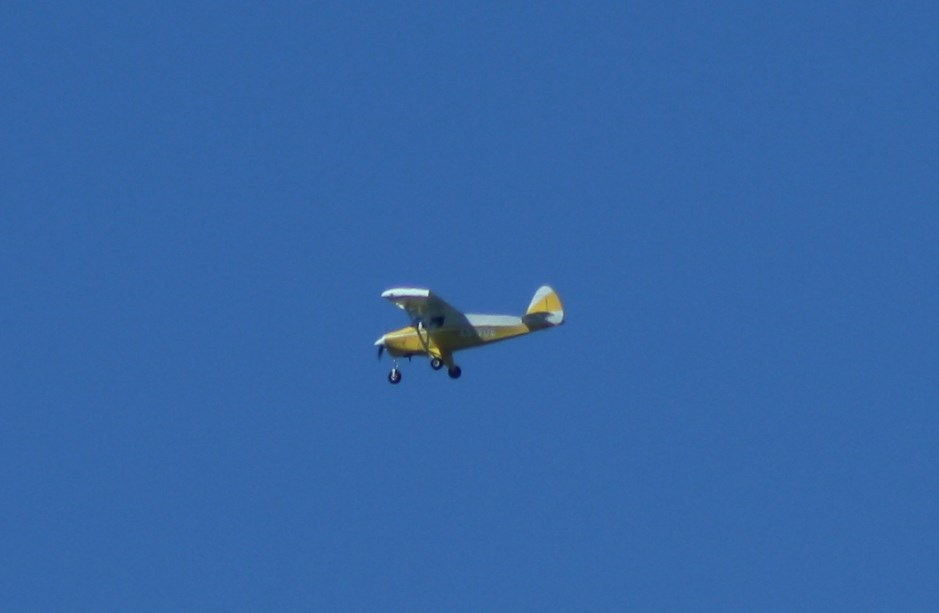
On 15 May 2006 at 0900Z, a Piper PA-22, registration ZS-WDE, was involved in an incident during a private flight. The aircraft, with one person on board, experienced an engine failure and subsequently made a forced landing in an open field approximately 5 nautical miles from Fly Inn Aerodrome. The pilot sustained no injuries, and the aircraft sustained damage to the right hand undercarriage and scratch marks on the front end of the aircraft fuselage.
Sequence of Events
According to the pilot, the flight departed from Kitty Hawk Aerodrome with the intended destination of Fly Inn Aerodrome. After entering Waterkloof airspace, the pilot was cleared to maintain an altitude of 5,500 feet above mean sea level on a QNH of 1026 hPa, and was instructed to call joining the Fly Inn circuit. Shortly thereafter, the pilot encountered turbulence, and then the engine failed. The pilot stated that due to the presence of high tension wires ahead, there was no time to conduct troubleshooting to determine the cause of the engine failure. Instead, the pilot selected a landing area and attained the best glide speed. From the time of engine failure until touchdown, approximately 30 seconds elapsed, as the aircraft was only about 200 feet above ground level.
Upon landing, the right hand main wheel impacted an anthill, causing the aircraft to yaw to the right. The aircraft then collided with a fence, passed through it, and came to a halt approximately 100 meters past the fence line.
Post-Incident Inspection
After the incident, an Approved Person (AP) visited the site. The AP checked for fuel flow: the left tank contained approximately 30 liters and the right tank about 25 liters, with adequate fuel flow from both. The AP then started the engine, selecting the right tank for about 5 minutes and then the left tank for about 5 minutes, and found no indication of fuel starvation as the engine continued to run. Prior to the test, the fuel selector was found in the off position. During the repair process, all fuel lines, gascultors, and the carburettor were checked and found to be in order.
The aircraft had a valid Authority to Fly, issued on 12 June 2005. The last Annual Inspection prior to the incident was certified on 30 May 2005 at 3889.98 airframe hours, and the aircraft had flown 55.98 hours since that inspection.
Probable Cause
The probable cause of the incident was an undetermined engine failure, as no conclusive evidence could be found as to what might have caused the engine to fail.