Incident Details
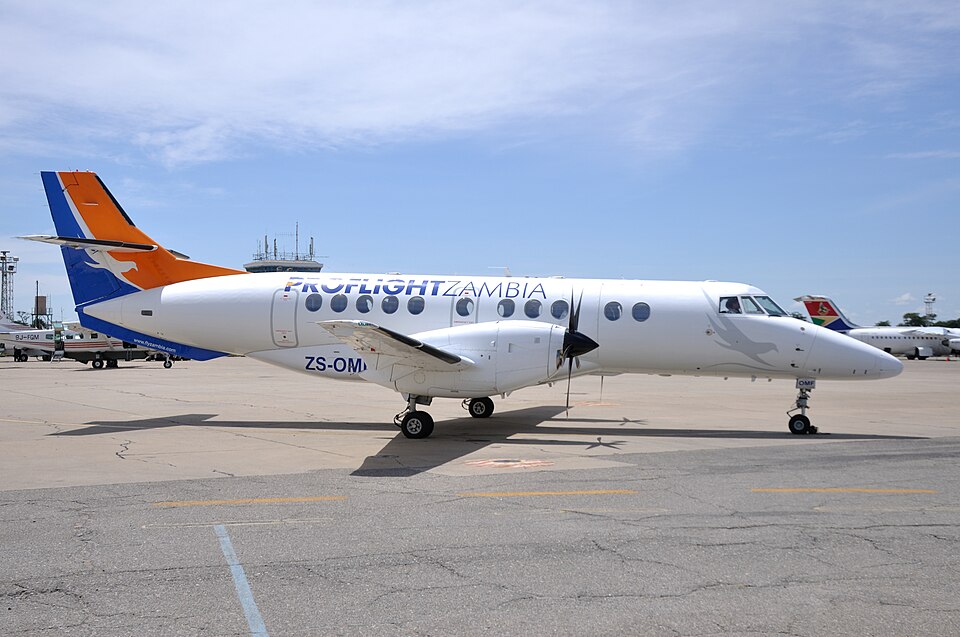
On 8 October 2006 at approximately 1825Z, a Jetstream 4100 aircraft (registration ZS-OMF) departed from Durban International Airport (FADN) on an international flight to Maputo International Airport (FQMA). The flight, operated under call sign LAM 2326 by M.E.X. (Mocambique Expresso S.A.R.L.) under a dry lease agreement from South African Airlink (Pty) Ltd, carried 3 crew and 17 passengers. The pilot-in-command held an Airline Transport Pilot License and had accumulated 13,986.35 total flying hours, including 3,976 hours on type. The co-pilot held a Commercial Pilot License with 1,377.43 total hours.
Sequence of Events
At approximately 1845Z, while climbing through 12,000 ft AMSL (Flight Level 120) towards the intended cruising altitude of 21,000 ft AMSL (Flight Level 210), the propeller ice indicators warned of icing conditions. The captain cancelled the warning and activated the propeller de-icing system on both propellers, continuing the climb. Upon reaching 18,000 ft AMSL (Flight Level 180), both engines flamed out. The captain then switched on the engine anti-icing system for both engines. The left engine relit within 6 seconds via the auto-ignition system and regained power, but the right engine did not restart.
Shortly thereafter, the aircraft entered an uncontrolled roll to the right, completing two full rolls over 75 seconds. The first roll occurred in a steep nose-down attitude of -70 degrees; the captain pulled the aircraft up at around 4,000 ft, experiencing a peak vertical acceleration of +5g. The second roll began at about 45 degrees nose-up and ended at approximately 30 degrees nose-down. Between the rolls, the aircraft accelerated to over 400 knots IAS (maximum demonstrated diving speed is 305 knots CAS) and lost 13,000 ft of altitude in 45 seconds, with overspeed conditions on both propellers and engines. The flight data recorder indicated that the aircraft entered icing conditions at about 12,000 ft, but engine intake anti-icing was not selected until reaching 18,000 ft, approximately 7 minutes later.
At 5,000 ft AMSL (Flight Level 050), the pilot regained control, though the aircraft continued descending rapidly. The captain manually restarted the right engine below 1,000 ft AGL. He then initiated a climb and returned to Durban International Airport, landing without further incident. During the return flight, oscillation was noted on the right engine torque indicator; after landing, the right engine was shut down, and the aircraft taxied to the apron using only the left engine.
Weather Conditions
According to the official weather report, cloudy conditions (Altocumulus) prevailed north of Durban, with moist air between 600 hPa and 450 hPa. Temperatures ranged from -3°C to -16°C, indicating that aircraft icing would occur at altitudes from 13,000 ft to approximately 21,000 ft AMSL. These conditions were favorable for icing at the altitudes flown.
Aircraft and Crew Information
The aircraft, a Jetstream 4100 manufactured by BAE Systems in 1999, had a total airframe time of 20,090.48 hours at the time of the incident. Both engines were Honeywell/Garrett TPE331-14GR/HR models. The aircraft showed evidence of stress along both wings, with cracks in the right wing/fuselage fairing, but sustained no major damage. All occupants escaped unharmed; there were no injuries or fatalities. The crew held valid licenses and medical certificates with South African validations, and the aircraft was correctly maintained per available information. The approved maintenance organization was audited by the SACAA on 28 November 2006 with no major findings.
Probable Cause
The probable cause, as stated in the investigation report, is that while climbing to their cruising altitude of 21,000 ft AMSL, the aircraft encountered icing conditions, which caused both engines to flame out, resulting in a loss of control, with recovery intervention taking place below 1,000 ft AGL.