Flight History
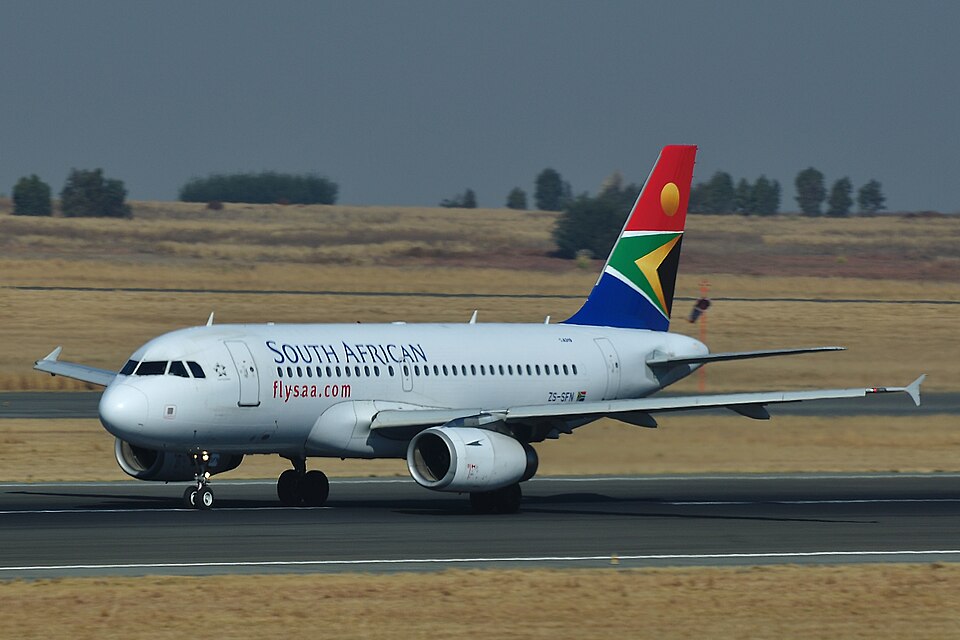
On 6 September 2008, the aircraft (registration ZS-SFN), an Airbus A319-131, was dispatched from O.R. Tambo International Airport (FAJS) to Cape Town International Airport (FACT) on scheduled domestic flight SA377 with the No. 1 engine bleed air system inoperative. The Minimum Equipment List (MEL 36-11-01 Category C) required the No. 1 engine bleed to be selected closed and the No. 2 engine bleed selected open via push-button switches on the overhead panel. However, the captain decided to select both engine bleed switches to the open position, planning to isolate a faulty bleed system if a malfunction occurred. An uneventful flight to FACT followed.
Pre-flight Inspection
The following morning, on 7 September 2008, a different cockpit crew arrived for the return flight (SA378) from FACT to FAJS. The Flight Defect and Maintenance Report (TL/36) and Acceptable Deferred Flight Defect Record (GT/83) were brought to the aircraft ten minutes before departure. The crew reviewed the documents, which indicated that the No. 1 engine bleed was faulty and deferred per the MEL, but they did not reconfigure the system, assuming it was already set as per the MEL from the previous flight. Additionally, the crew failed to notice that the 'INOP' decal was placed on the No. 2 engine bleed switch instead of the No. 1 switch.
Incident
The aircraft departed FACT at approximately 0352Z with the No. 2 engine bleed selected closed (with the 'INOP' decal) and the No. 1 engine bleed selected open. During cruise at 37,000 feet above mean sea level (AMSL), at about 0452Z, the cockpit crew received an Electronic Centralised Aircraft Monitoring System (ECAM) warning indicating failure of the No. 1 engine bleed. The crew closed the No. 1 engine bleed using the push-button on the overhead panel. The cabin altitude began to increase rapidly. The crew contacted FAJS Air Traffic Control on VHF frequency 128.3 MHz, reported the pressurization problem, and requested an emergency descent. During the descent to 11,000 feet AMSL, the cabin altitude warning sounded at 33,000 feet, prompting the crew to don cabin oxygen masks. The Auxiliary Power Unit (APU) was started, and pressurization was re-established at 15,000 feet AMSL. The flight continued to FAJS and landed safely. No crew or passengers were injured, and the aircraft was undamaged.
Probable Cause
Failure of the crew to carry out a proper pre-flight inspection leading to the number 1 engine bleed air system being left on and the number 2 engine bleed air system being secured; subsequently the failure of the pressurisation system.