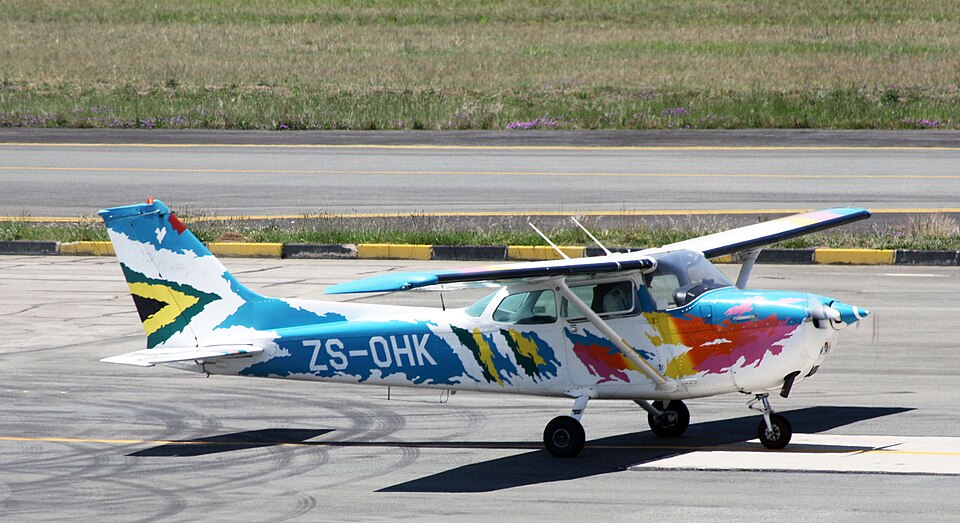
Accident Overview
On 21 September 2021, at approximately 1105Z, a Cessna 172N aircraft, registration ZS-OHK, operated by an aviation training organisation, was returning to Lanseria International Airport (FALA) after a training flight. The aircraft touched down on Runway 07 with the nose gear first, resulting in a hard landing. The propeller struck the runway surface, and the aircraft skidded on the bottom of the engine cowling before coming to a stop on the left edge of the runway. The aircraft sustained substantial damage, but the student pilot, the sole occupant, was not injured.
Flight and Pilot Details
The pilot held a Student Pilot Licence issued on 2 June 2021 and a Class 2 aviation medical certificate valid until 31 March 2022. The pilot had accumulated a total of 50.2 flight hours, with 38.8 hours flown in the 90 days preceding the accident. The aircraft, a Cessna 172N, had a total of 11,306.7 airframe hours at the time of the accident. The last mandatory periodic inspection was performed on 15 September 2021 at 11,293.2 airframe hours, and the aircraft had flown 13.5 hours since that inspection.
Eyewitness Account and Investigation
An eyewitness at the holding point of Runway 07 reported that the aircraft approached with one notch of flaps extended, then ballooned and lost height rapidly, leading to the hard landing. Examination of the aircraft after the accident revealed that the nose gear had broken off. The propeller blades showed damage indicating that the engine was producing substantial power at impact. Flight control surfaces moved freely, and no evidence of control difficulty was found. Weather at the time of landing was reported as favourable, with wind from 150° at 5 knots. The aircraft's flight folio showed no pre-existing defects. The engine examination showed nothing abnormal.
Probable Cause
The aircraft approached at a high speed and it ballooned before landing hard with its nose gear touching down first. This caused failure of the nose gear, and thus, the aircraft skidded and came to a halt on the left edge of the runway.
Safety Action and Message
No safety action was taken by the reporting organisation. The report included a safety message advising pilots to adhere to landing limits specified in the Pilot's Operating Handbook.