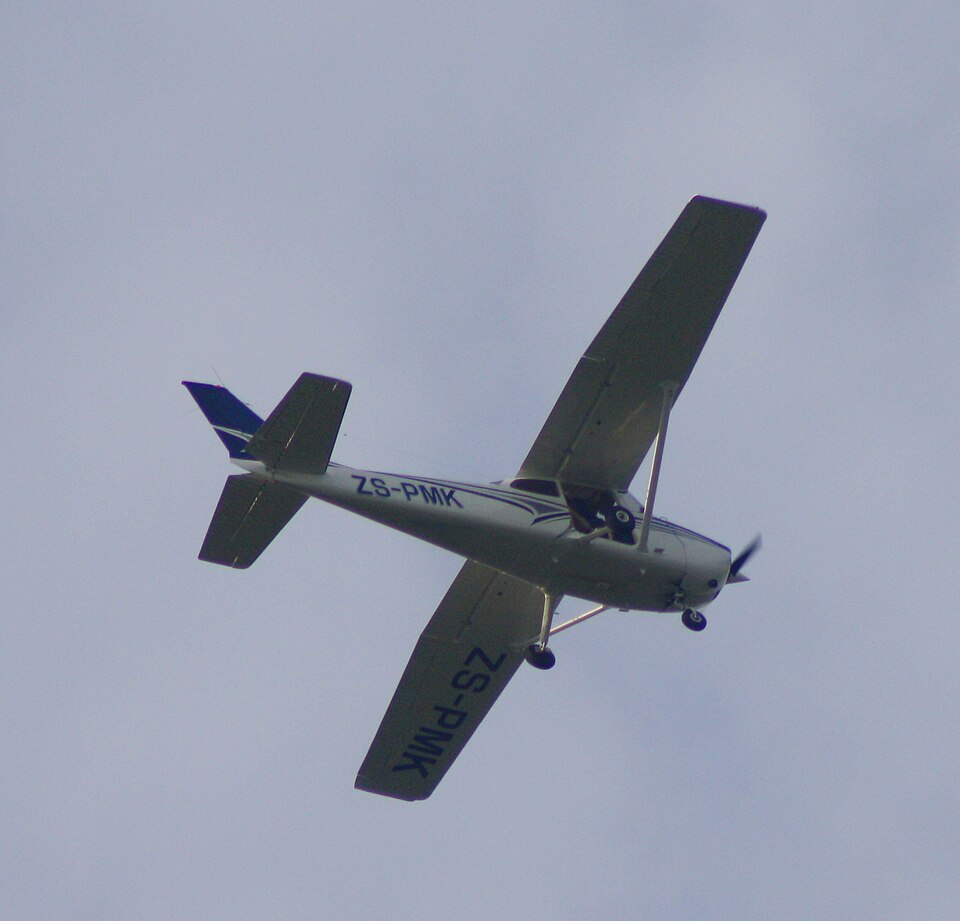
Accident Details
On 16 November 2021, at approximately 0750Z, a Cessna 172M with registration ZS-PMK was landing on Runway 29 at Wonderboom Aerodrome (FAWB) after a training flight conducted under Part 141 of the South African Civil Aviation Regulations. The pilot, the sole occupant, had been cleared for landing by air traffic control. The aircraft touched down just after the threshold with the main wheels first in a high nose-up attitude. When the pilot lowered the nose gear, the aircraft contacted the runway surface hard, resulting in damage to the nose gear oleo and the forward firewall. The pilot was not injured and vacated the runway unassisted. The meteorological conditions at the time included a surface wind of 330° at 7 knots, temperature 29°C, dew point 16°C, and barometric pressure 1017 hPa.
Aircraft and Pilot Information
The aircraft was a Cessna 172M. The pilot, a 22-year-old male, held a valid Private Pilot Licence (PPL). He had a total of 93.2 flying hours, of which 10.7 hours were on the Cessna 172M type. In the 90 days preceding the flight, he had flown 6.4 hours. The aircraft was on a training flight from Wonderboom Aerodrome, returning to the same airport.
Findings
The investigation noted no mechanical malfunction of the aircraft or engine. The aircraft's weight and balance was not compromised as the pilot was the sole occupant. The prevailing wind included a 6-knot crosswind component from the right. The flight was conducted by an aviation training organisation (ATO) holding a valid certificate issued by the South African Civil Aviation Authority (SACAA) on 22 January 2021, valid until 31 January 2026.
Probable Cause and Contributory Factors
The probable cause of the accident was the pilot's incorrect landing technique, which resulted in a hard landing. A contributing factor was the prevailing 6-knot crosswind from the right at the time.
Safety Action
Following two hard landing accidents involving the same ATO on the same day, the institution issued a safety notice on 16 November 2021. The notice required all student pilots, pilots under training, and pilots wishing to hire and fly an aircraft from the ATO to undergo a dual check of at least three circuits with a flight instructor before their next flight.