Introduction
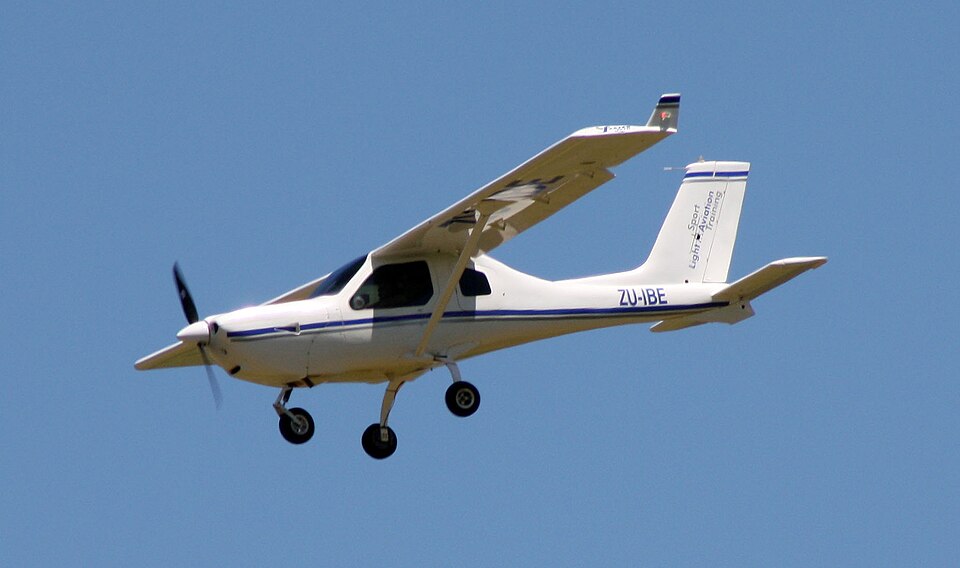
On 9 October 2022 at approximately 0745Z, a pilot and a passenger departed Wonderboom Aerodrome (FAWB) in a Jabiru J170 aircraft, registration ZU-IBE, on a private flight to Kitty Hawk Aerodrome (FAKT), both in Gauteng province. The flight was conducted in visual meteorological conditions (VMC) by day under Part 94 of the Civil Aviation Regulations (CAR) 2011.
Sequence of Events
The pilot stated that the pre-flight inspection showed no anomalies and the flight to FAKT was uneventful. Upon reaching FAKT, the pilot joined from the north at 6,100 feet and positioned the aircraft for a right-hand circuit. He carried out down-wind checks and extended his down-wind route to allow a longer final approach. While on the base leg at approximately 75 knots, the pilot observed a right crosswind indicated by the windsock. On final approach, the aircraft was at approximately 65 knots. The pilot rounded out over the threshold of Runway 01. The aircraft floated approximately 150 metres from the threshold before landing with the right wheel first to accommodate the crosswind. The remaining runway length was 748 metres; the aircraft required 468 metres to stop safely. The pilot applied brakes and felt deceleration but noticed insufficient slowing while rolling past the club house. He elected to further slow the aircraft by steering onto the grass area next to the runway. He turned the aircraft to the right to avoid rolling into trees. The nose landing gear broke off upon contacting the grass surface, and the aircraft came to a full stop approximately 1 metre from the right side of Runway 01. The pilot shut down the engine and exited the aircraft unassisted with the passenger.
Injuries and Damage
Neither the pilot nor the passenger were injured. The aircraft sustained substantial damage; the nose landing gear broke off.
Weather
Weather information from the South African Weather Service (SAWS) for Irene Met Upper Air Research Centre (FAIR) at 1000Z on 9 October 2022: wind direction 320°, wind speed 7 knots, temperature 30 °C, dew point 2 °C, QNH 1027 hPa, CAVOK. The pilot questionnaire for FAKT reported: wind direction 310°, wind speed 5 knots, visibility 9999 metres, temperature 29 °C, dew point 8 °C, CAVOK. The maximum allowable crosswind velocity per the Pilot’s Operating Handbook (POH) is 14 knots; the crosswind on the day was approximately 5.36 knots, within aircraft capabilities.
Findings
- The pilot held a valid Private Pilot Licence (PPL) issued 17 September 2019, expiring 31 December 2022, and a Class 2 medical certificate issued 7 January 2019, expiring 31 January 2024, with no restrictions.
- The last mandatory periodic inspection (MPI) before the accident was on 2 July 2022 at 2826.7 hours. A Certificate of Release to Service (CRS) was issued on 30 August 2022, expiring 29 August 2023 or at 2927.2 hours. The aircraft had accumulated 71.3 hours since the last MPI.
- The pilot had 126.8 total flying hours, including 1.4 hours on the aircraft type.
- The POH recommends 65 knots for best glide approach speed; the pilot flew at 65 knots on final approach. Runway 01 is 898 metres long; the POH states the aircraft requires 468 metres to land. The aircraft landed 150 metres from the threshold, leaving 748 metres, sufficient for a safe stop.
Probable Cause
The pilot landed deep, which resulted in the pilot steering the aircraft onto the grass area; the nose gear broke off in the process.