Aircraft and Pilot Information
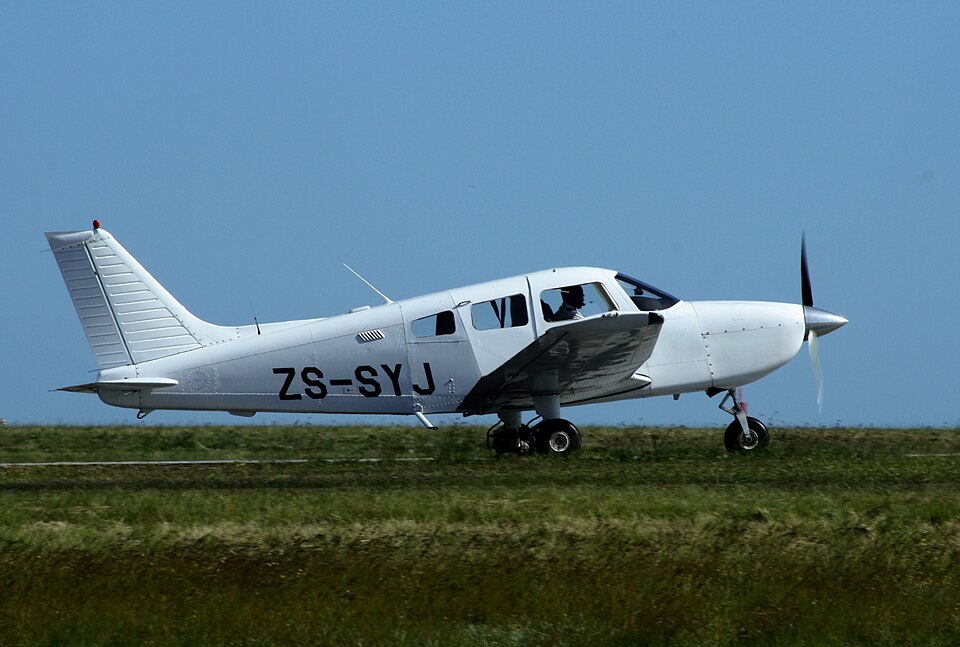
The aircraft involved was a Piper Archer PA 28 R, registration ZS-SYJ, serial number 28-43208. It had accumulated 19,157 total airframe hours. The aircraft was maintained by an approved maintenance organization; its last mandatory periodic inspection (MPI) occurred on 28 January 2022 at 19,151 hours, and a Certificate of Release to Service was issued that same day. The accident occurred six hours after the MPI. No pre-flight anomalies were reported. The alternator had been inspected during the last 14,400-hour check.
The pilot, aged 29, held a valid Student Pilot Licence (SPL) issued on 22 December 2020 and revalidated on 4 January 2022, with an expiry date of 3 January 2023. He also held a Class II medical certificate issued on 16 November 2021, valid until 16 November 2025, with no restrictions. His total flying experience was 101.3 hours, of which 16.6 hours were on the accident aircraft type.
The Flight
On 31 January 2022, at approximately 1400Z, the student pilot was conducting a solo navigation training flight under visual meteorological conditions, in accordance with Part 141 of the Civil Aviation Regulations. The flight departed from Port Alfred Airport (FAPA) at 1205Z en route to Mazeppa Bay, with a planned return to FAPA. About one and a half hours into the flight, the pilot reported a loss of electrical power. He noticed that electrical instruments and radios progressively lost power, while the alternator indicator showed a positive charge. Additionally, the pilot heard an unfamiliar rattling sound from the engine. He initially intended to follow the lost radio communications procedure and return to FAPA but decided instead to perform a precautionary landing at a suitable field.
Accident Sequence
The pilot selected a grass field located approximately 44 nautical miles northeast of FAPA, which was on his return route. During the landing roll, the left wing leading edge collided with a fence pole. The aircraft came to a stop with damage to the left wing. The pilot was not injured.
Post-Accident Findings
A post-flight inspection revealed that the alternator had failed due to a broken cooling fan, which caused the electrical failure. The aircraft sustained substantial damage to the left wing; no other damage or injuries were reported.
Probable Cause
The probable cause was an electrical failure in-flight due to alternator failure, followed by an unsuccessful precautionary landing.