Accident Sequence
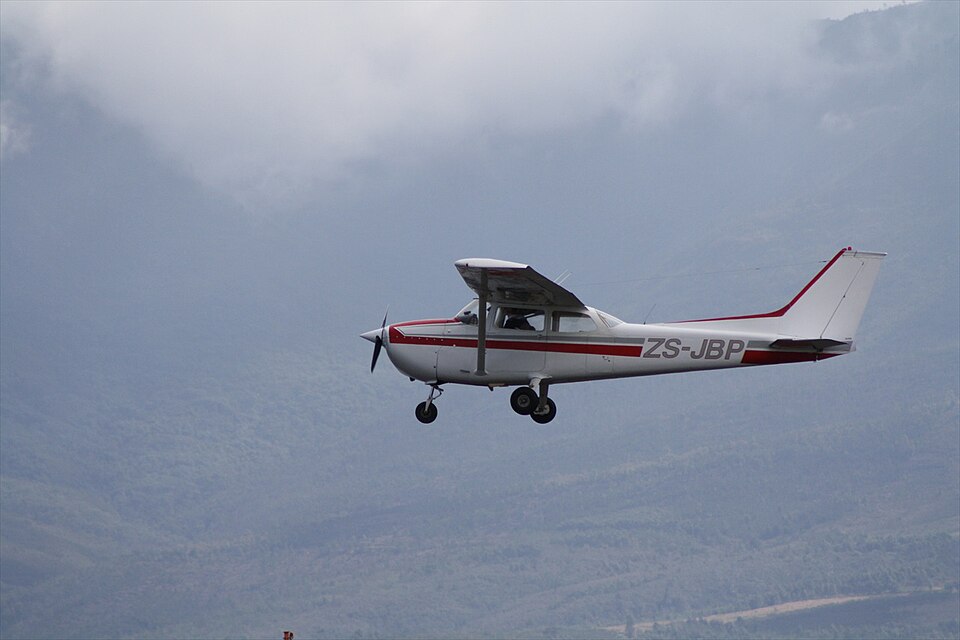
On 30 June 2022 at 0800Z, a student pilot conducted a solo navigation flight in a Cessna 172M (ZS-JBP) from Grand Central Aerodrome (FAGC) in Gauteng Province. The flight was operated under Part 141 training rules in visual meteorological conditions with light and variable surface winds. After takeoff from Runway 17, the pilot routed to Rustenburg Aerodrome (FARG) and Pilanesberg Aerodrome (FAPN), performing touch-and-go landings at each before returning to FAGC.
Upon return, air traffic control instructed the pilot to report long final for Runway 17. On short final, the aircraft encountered slight turbulence, causing a swerve to the right. As the aircraft passed the threshold, the pilot reduced power to idle, then applied power and pulled back on the control column to execute a go-around. The nose pitched up steeply, and the pilot pushed the control column forward to lower the nose and increase airspeed. The aircraft then touched down hard on the runway, damaging the nose gear oleo. The propeller blades struck the runway surface, and the rudder counterweight separated from the aircraft. The pilot taxied to the parking bay without notifying ATC or requesting fire/rescue assistance.
Aircraft Damage
The aircraft sustained substantial damage to the firewall, nose gear oleo, propeller blades, and engine cradle. The rudder counterweight was found on the runway during inspection. There were no injuries reported.
Probable Cause
The aircraft was too low on approach and, whilst the aircraft was configured for a go-around, the nose lifted too high, which resulted in a stall and the hard impact on the runway.