What Happened
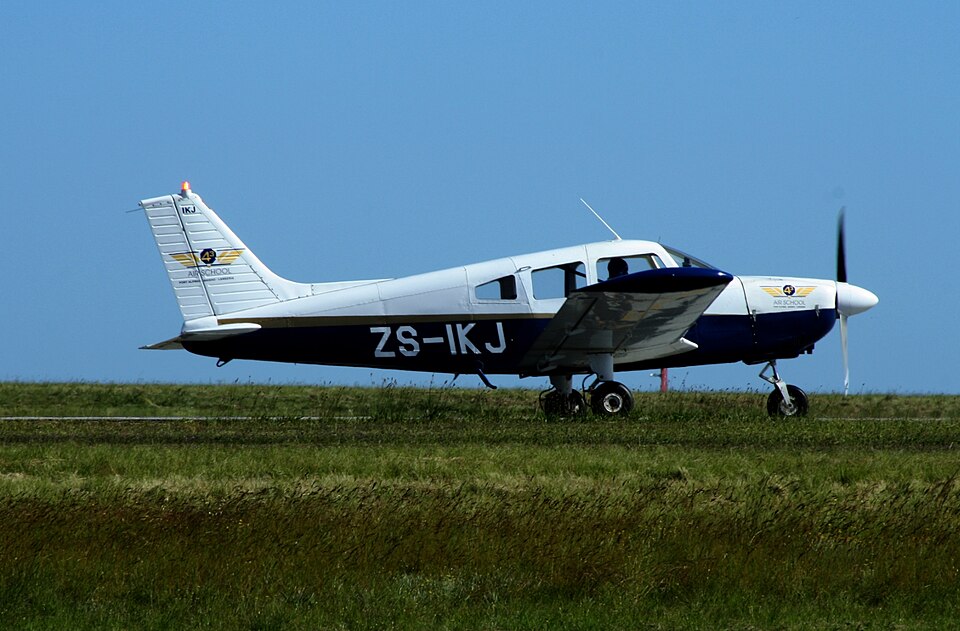
On 14 May 2024 at 0648Z, a Piper PA-28 180F (registration ZS-IKJ) departed Port Alfred Aerodrome (FAPA) for a training flight under Part 141. After six circuits and landings with an instructor, the student pilot continued solo. On the fourth solo circuit, the aircraft touched down hard with the nose gear first. The student pilot retracted the flaps and lost directional control, causing the aircraft to exit the runway and impact a bush on the left side. The nose gear failed, and the right-wing leading edge and propeller were damaged. No person was injured.
Aircraft Information
The Piper PA-28 180F (serial number 28-7105145) had a valid Certificate of Airworthiness and had accumulated 18,547 total hours. The last mandatory periodic inspection was on 22 March 2024. The aircraft was airworthy at dispatch.
Pilot Information
The student pilot held a Student Pilot Licence issued on 2 November 2023 (expiry 5 October 2024) and a Class 2 medical certificate with no restrictions. The pilot had 31.8 total flying hours, all on type.
Findings
The aircraft flew past the reference point (240 metres from the threshold) at approximately 290 feet AGL, well above the prescribed flare height of 10-20 feet AGL. The flare was executed too high, resulting in a hard landing with the nose gear first. The nose gear subsequently failed, and the aircraft veered left off the runway.
Probable Cause
The aircraft’s height above ground level was too high on the final approach, and the pilot flared the aircraft, which resulted in a hard landing with the nose gear first that subsequently failed. This led to a runway excursion to the left.
Contributing Factor
Failure to execute a go-around.
Safety Actions
None.