Incident Overview
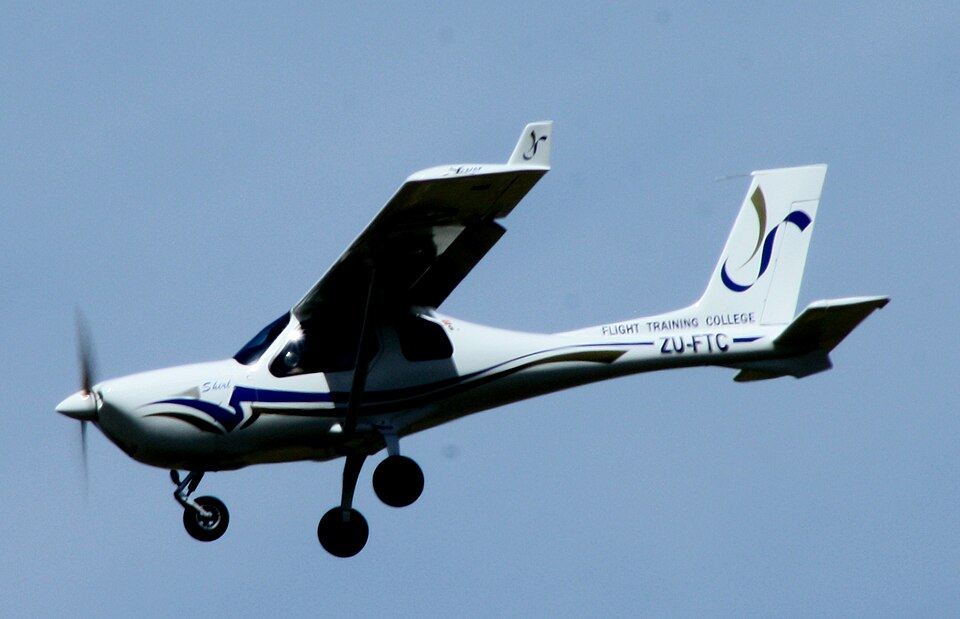
On 6 June 2014, a Jabiru SP aircraft, registration ZU-FTC, was involved in an incident during a cross-country navigational training flight. The sole occupant, a private pilot, departed from George Aerodrome (FAGG) bound for Tsitsikamma and then returning to George. The flight was conducted under visual flight rules (VFR) and a flight plan had been filed.
Sequence of Events
After takeoff, the pilot climbed to 1 500 ft above mean sea level (AMSL). While passing abeam Beacon Island at Plettenberg Bay, he initiated a climb to 3 500 ft AMSL. At approximately 2 500 ft AMSL, the engine began running roughly and a strong vibration was felt on the control column. The pilot throttled back and turned left towards Plettenberg Bay Aerodrome (FAPG), broadcasting a Pan Pan Pan call on the Cape Town Information East frequency (127.575 MHz) to report the rough-running engine and his intention to divert.
As the pilot rolled the wings level at about 2 500 ft AMSL, the propeller suddenly separated from the crankshaft flange, flying forward, upward, and over the cockpit. He immediately broadcast a Mayday on the same frequency, stating that the propeller had separated and he was going down. Due to decreasing altitude, radio communication became disrupted; another aircraft at higher altitude relayed the message.
The pilot spotted an open stretch of beach ahead and decided to land there. He touched down safely and the aircraft came to a halt approximately 60 m after touchdown. The first responders were members of the local sea rescue station, who arrived via rubber duck. The following day, the propeller was recovered from rocks where it had washed up to the southeast.
Aircraft and Pilot Information
The aircraft was a Jabiru SP (serial number 44), manufactured in 2009, with a total airframe time of 678.9 hours. It was powered by a Jabiru 2200A engine (serial number 22A 3311) and fitted with a Sensenich 42” propeller. The pilot, a 29-year-old male with a valid private pilot license, had 104.4 total flying hours, including 9.2 hours on type. He held a night rating and had no previous incidents.
Damage and Injuries
The incident resulted in no injuries to the pilot or anyone on the ground. Damage to the aircraft was limited to the nose structure and the engine, which had seized, in addition to the separated propeller. There was no fire. The cockpit remained undamaged, and the pilot used the three-point inertia harness.
Meteorological Conditions
Weather at the time, derived from the pilot’s report and the 0800Z METAR for George, included surface wind from 330° at 5 kt, visibility greater than 10 km, temperature 12 °C, and clear skies.
Probable Cause
The pilot executed a forced landing on an open section of beach following a catastrophic engine failure in flight.