History of Flight
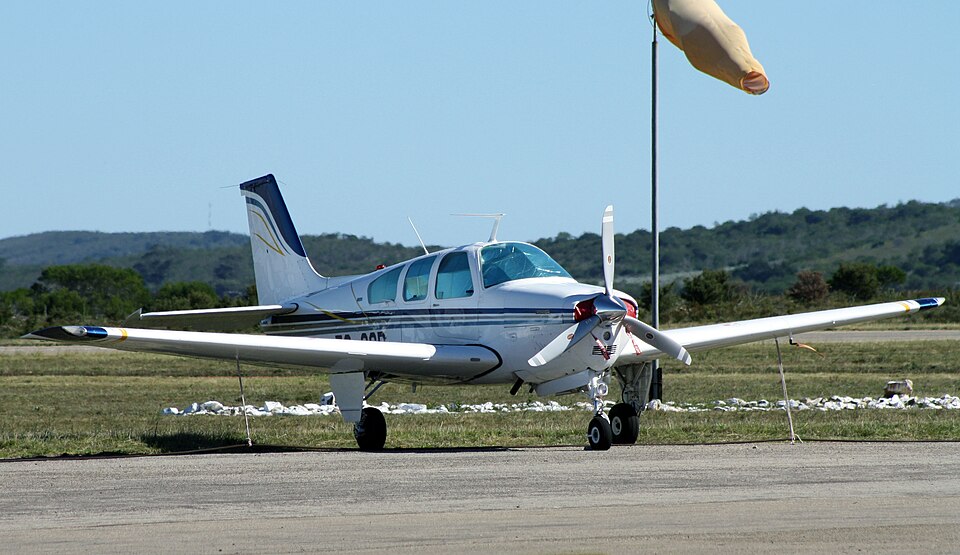
On 19 September 2017 at approximately 0750Z, a Beech F33A (registration ZS-OGD) departed from the Borneo airstrip in the Timbavati game reserve, Limpopo province, for a private flight to Lanseria Aerodrome (FALA) in Gauteng province. The aircraft carried the pilot and one passenger. During the approach to runway 25, the pilot conducted pre-landing checks, which included lowering the landing gear. The green down-and-locked indicator lights on the instrument panel did not illuminate. The pilot requested Air Traffic Control (ATC) permission to perform a fly-past on runway 25 so that the tower could visually inspect the landing gear. ATC reported that the landing gear appeared to be down. The pilot then flew another circuit and attempted to extend the gear manually using the hand pump, but the green lights still did not illuminate. A second fly-past on runway 07 was performed; ATC this time reported that the undercarriage appeared partially down, and no green light indication was observed in the cockpit. The pilot elected to land on runway 25. During the landing, the undercarriage collapsed. Fire services were on standby. The pilot and passenger sustained no injuries. The aircraft suffered substantial damage to the propeller, undercarriage, and underbelly.
Previous Occurrence
The pilot reported that on 7 September 2017, while returning from Nelspruit airfield (FANS) to Krugersdorp airfield (FAKR), the green lights also failed to illuminate. The pilot flew to Lanseria to have ATC visually inspect the landing gear. ATC indicated the gear appeared down. The pilot requested fire services on standby and landed without incident. A technician from Mahogany Air at Lanseria inspected the electrical circuit and microswitches but found no fault. No further problems were experienced during landing thereafter.
Investigation Findings
The investigation examined the aircraft's landing gear system. It was determined that the landing gear motor was drawing excessive current from the electrical system as a result of a stiff bearing in the motor. This caused an overload that tripped the circuit breaker, cutting electrical power to the landing gear motor. The reason for the failure of the manual extension system could not be ascertained; it was considered likely that the manual system was not correctly engaged. The aircraft had a valid certificate of airworthiness (expiring 7 May 2018) and was operated within weight and balance limits. The pilot held a valid private pilot license with a type endorsement. The last maintenance inspection prior to the accident was certified on 10 March 2017 at 2225.10 airframe hours; the hobbs meter at the time of the accident read 2287.91, indicating 62.81 hours since that inspection. Weather conditions at the time of the accident were not considered a contributing factor.
Probable Cause
The probable cause was stated as failure of the landing gear extension system due to the landing gear motor drawing excessive current from the electrical system as a result of a stiff bearing in the landing gear motor. That caused overload on the system and the circuit breaker popped, cutting the electrical current to the landing gear motor.