Incident Overview
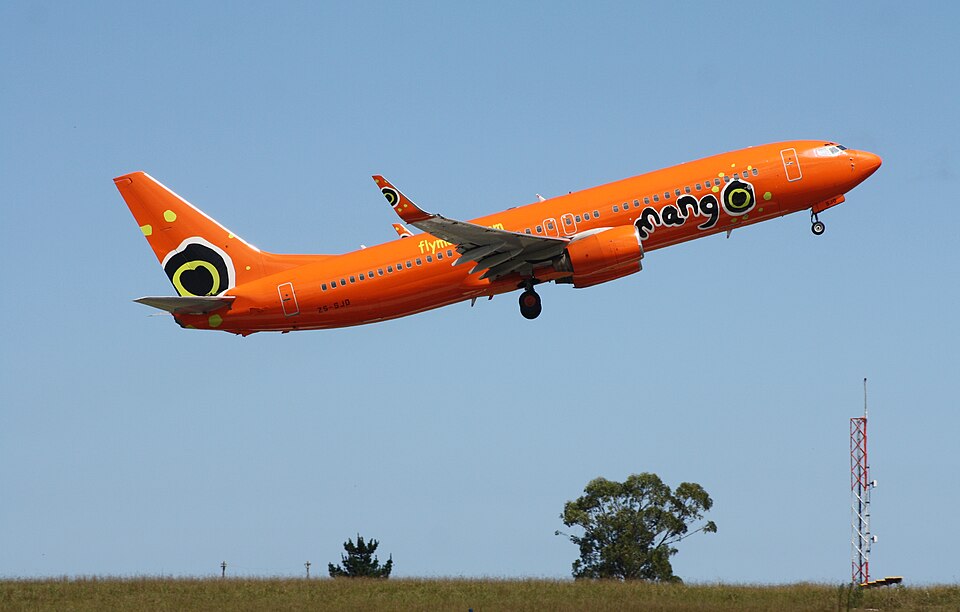
On 2 September 2019 at approximately 0554Z, a Boeing 737-800 aircraft, registration ZS-SJD, operated by Mango Airlines, departed O.R. Tambo International Aerodrome (FAOR) on a scheduled domestic flight to Cape Town International Aerodrome (FACT). The flight, operating under Part 121 of the Civil Aviation Regulations, carried two pilots, four crew members, and 141 passengers.
Flight History
According to the crew, just before the aircraft levelled off at Flight Level (FL) 360 near Bothaville in the Free State province, the "stab out of trim" light illuminated on the instrument panel and remained on while the autopilot was engaged. The crew referenced the Quick Reference Handbook (QRH) and disengaged the autopilot. Following disengagement, the aircraft's nose pitched down, indicating a significant horizontal stabilizer out-of-trim condition. The crew again followed QRH instructions, overriding the electric horizontal stabilizer motor clutch by applying force to the trim wheels, achieving manual horizontal stabilizer trim. They reported that the autopilot remained disengaged and that the automated electric horizontal stabilizer trim was unresponsive.
Crew Actions and Return
The pilot-in-command (PIC) advised Johannesburg radar that the autopilot was disengaged and that the aircraft was no longer compliant with Reduced Vertical Separation Minimum (RVSM) requirements. The radar controller cleared the aircraft to descend to FL280 (28,000 feet). Considering the fuel situation and the compromised flight controls, the crew declared an emergency by broadcasting "PAN PAN PAN" on 128.3 MHz and requested a return to FAOR. The controller approved the request and provided vectors. Emergency services were placed on standby due to a maximum flap setting limitation of 15 degrees. The crew conducted an instrument landing system (ILS) approach with manual trimming and landed safely on Runway 03L at 0649Z.
Investigation Findings
The investigation revealed that during the level-off at top of climb, the elevator continued moving in the nose-up direction without the stabilizer moving correspondingly, causing the "stab out of trim" light to illuminate. After autopilot disconnection, the elevator moved further nose-up in response to manual column input. The cause of the stabilizer trim not moving with the elevator could not be determined, as all subsequent tests on the system were satisfactory. The aircraft was not damaged, and no occupants were injured.