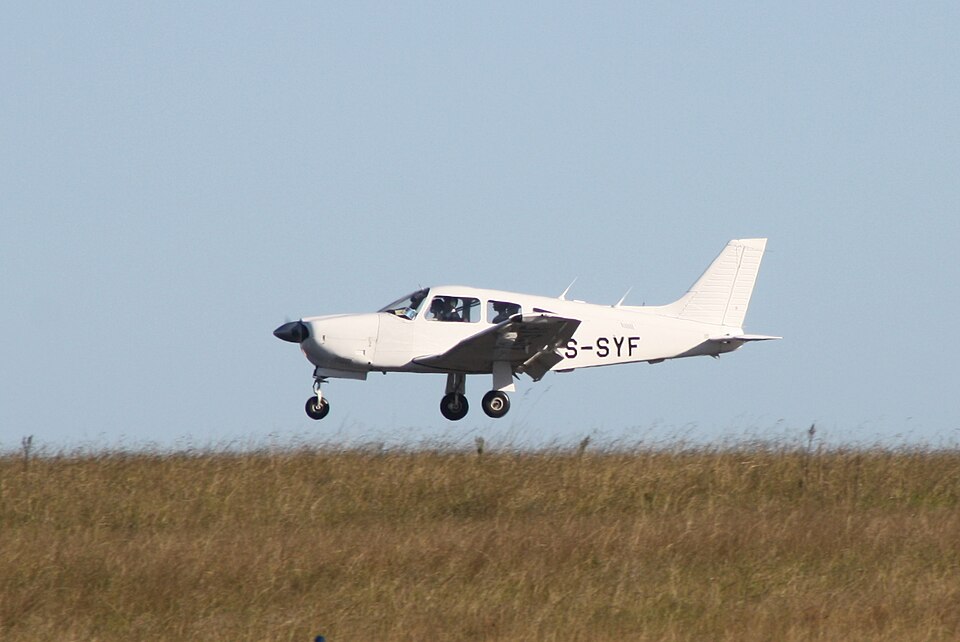
On April 12, 2024, a Piper Aircraft; PA-28R-201 (registration ZS-SYF) was involved in an aviation accident near Approximately 2 nautical miles (nm) west of Hamburg, Eastern Cape, ZA. Investigators recorded the probable cause as: The right-side magneto was not properly torqued which resulted in its separation from the engine housing in-flight, as well as excessive loss of oil and reduced power. This summary draws on records from the South African Civil Aviation Authority (SACAA) Accident and Incident Investigations Division.
On 12 April 2024, a Piper PA-28R-201 (ZS-SYF) experienced engine power loss during a training flight near Hamburg, Eastern Cape. The aircraft made a safe emergency landing with minor damage and no injuries.
Incident Overview and Flight Details On the morning of 12 April 2024, a Piper Aircraft PA-28R-201, registration ZS-SYF, departed Port Alfred Aerodrome (FAPA) in the Eastern Cape Province for a training flight. The aircraft was carrying a flight instructor and two student pilots, with the intention of conducting touch-and-go landing exercises at East London Airport (FAEL) before returning to FAPA. The flight was conducted under visual meteorological conditions (VMC) during the day, in accordance with Part 141 of the Civil Aviation Regulations (CAR) 2011. ## In-Flight Emergency and Emergency Landing The initial segments of the flight, including the arrival at FAEL and the touch-and-go exercises, were reported as uneventful. However, while en route back to FAPA, the crew encountered an emergency approximately 2 nautical miles east of Hamburg, Eastern Cape Province, at an altitude of 1,900 feet. The pilot-in-command reported a propeller overspeed indication, which was quickly followed by a loss of oil pressure and a rise in oil temperature. As engine power and RPM decreased, the aircraft was unable to maintain altitude. The instructor identified a suitable open field and executed an emergency landing. During the landing roll, the right-side wingtip struck an anthill, resulting in minor damage to the wingtip and navigation lights. All three occupants on board were uninjured. ## Investigation Findings and Probable Cause Post-incident inspection by the operator revealed that the right-side Slick magneto had dislodged from its mounting studs on the engine accessory housing. This separation caused a significant oil leak, leading to the depletion of the engine sump reserve and a subsequent loss of engine power. The Aircraft Maintenance Organisation (AMO) hypothesized that the top attaching stud hardware for the right-side magneto vibrated loose, forcing the magneto out of its mounting flange. This failure also caused the constant speed unit (CSU) propeller control to fail, preventing the maintenance of propeller and engine speed, and resulted in inadequate lubrication to the engine internals. ## Maintenance History and Contributing Factors The aircraft had a valid Certificate of Airworthiness and had undergone its last 50-hour mandatory periodic inspection on 4 February 2024. Maintenance records indicated that a used engine was fitted to the aircraft on 15 November 2023. The engine had been overhauled on 18 July 2023. Review of the flight folio revealed previous defect entries in March 2023 regarding rough running and climb performance, which were rectified, including a reset of the right-side magneto timing. Investigators concluded that the top nut securing the right-side magneto to the engine accessory housing was likely not tightened or torqued properly during installation. The threaded area on the top attaching stud showed damage associated with severe vibration, while the bottom nut remained properly torqued in place. ## Probable Cause and Safety Message The probable cause of the serious incident was the improper torquing of the right-side magneto, which resulted in its separation from the engine housing in-flight, excessive oil loss, and reduced power. This led to a successful forced landing. The contributing factor was the magneto not being properly fitted or torqued. The investigation issued a safety message recommending that Aircraft Maintenance Organisations (AMOs) ensure that Aircraft Maintenance Engineers (AMEs) strictly adhere to manufacturer instructions and that AMOs provide adequate supervision of AMEs.