Incident Details
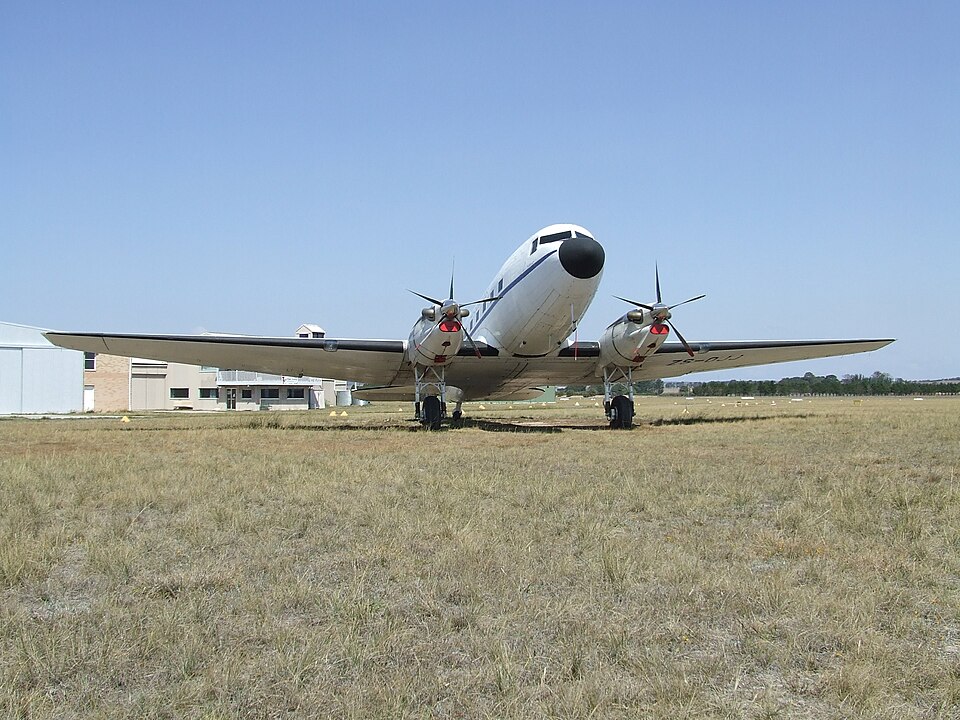
On 23 August 2001, a Douglas DC-3/C-47/65 ARTP aircraft, registration ZS-OJJ, operated an industrial aid flight from Goma Aerodrome to Lomela Aerodrome in the Democratic Republic of Congo. The flight carried one pilot, two crew members, and five Red Cross field team members (total 1+6 occupants). The pilot held an Airline Transport Pilot Licence (ATPL), was 42 years old, and had 9,260 total flying hours, including 3,500 hours on type. The aircraft's last inspection (Phase 2) was certified on 22 July 2001 at 18,874.04 flying hours; an additional 77.2 hours had been accumulated since.
Sequence of Events
The flight was scheduled to transport the Red Cross team to Lomela, which had not seen any aircraft land in approximately four years, although DC-3s had operated there regularly in the past. After an aerial runway inspection, the crew deemed the runway acceptable and landed. Shortly after touchdown, the aircraft sank into soft soil and could not move under its own power. It was pushed out by hand and taxied for departure. During the turn-around, the right main wheel became stuck again, but no damage occurred. Due to fading daylight, the crew decided to stay overnight.
The next morning, the aircraft was defueled to reduce takeoff weight. Following a runway inspection, a takeoff was attempted. During the takeoff roll, both main wheels sank into soft soil, and both propellers struck the runway surface.
Damage and Injuries
No injuries occurred to the crew or six passengers. The aircraft sustained damage to its propellers and the hot sections of both engines. There was no structural damage. The operator held valid operating certificates (Part 121, numbers N081D and I/N032) at the time.
Probable Cause
Even though the crew conducted a runway inspection, and having experienced soft areas during landing, they decided to take-off on the same runway and encountering another soft area which caused the main wheels to dig into the soil and resulted in both propellers to strike the ground.