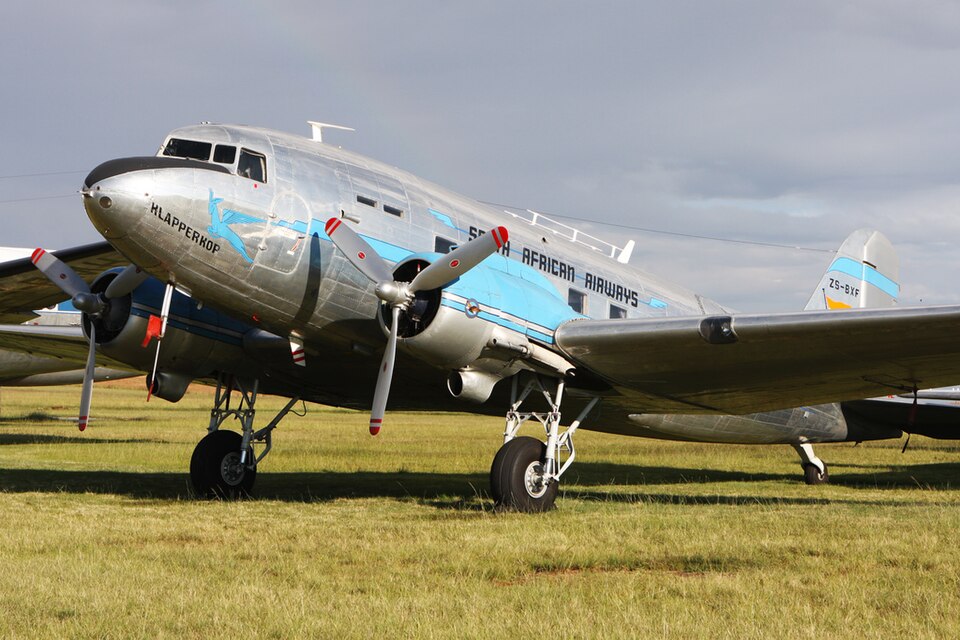
Accident Details
On 21 November 2003, a Douglas DC-3C aircraft, registration ZS-BXF, operated a ferry flight from Swartkops Aerodrome (FASK) to Lanseria Aerodrome (FALA) with a crew of two pilots and a supernumerary pilot. The flight departed FASK at 1410Z and arrived at FALA for a sightseeing flight with 24 passengers. After the sightseeing flight, the aircraft departed FALA at 1610Z for the return ferry to FASK with only the three occupants.
Sequence of Events
At approximately 6000 feet above mean sea level and 1500 feet above ground level, south of and downwind of Runway 24R, the left engine failed. The first officer was flying, and the captain handled the emergency. The captain activated the left engine booster pump and switched the left fuel tank selection from left main to left auxiliary tank; the engine recovered. Shortly thereafter, the right engine also failed. The first officer initiated a turn toward Runway 24 while the captain attempted to restart the right engine by switching its booster pump on and selecting the right auxiliary tank. The right engine recovered. According to the crew, both engines then failed again. Realizing they would not reach the runway, the crew executed a wheels-up forced landing on an open field two nautical miles east of Lanseria (VOR). During the landing, the captain continued trying to restart the engines by selecting different fuel tanks. After the aircraft came to a stop, all three occupants evacuated. They were later flown by helicopter to Lanseria airport and reported the accident from the control tower.
Probable Cause
The engines failed due to fuel starvation. Contributory to the fuel starvation was the incorrect selection of fuel tanks and also because the crew did not know which tanks had the most fuel.