Accident Summary
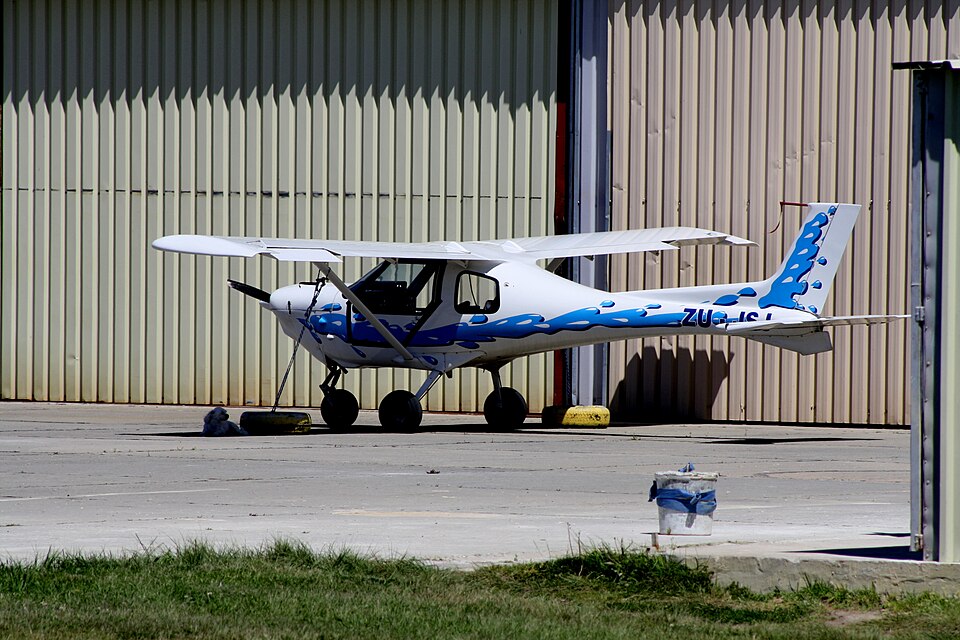
On 23 June 2005, at 1200Z, a Jabiru SK aircraft (registration ZU-JSJ) operating a training flight was involved in a runway excursion accident at D200 Aerodrome near Cape Town, South Africa. The aircraft sustained substantial damage to the left-hand wing and main landing gears. The two occupants, an instructor and a student, were not injured.
Accident Sequence
The instructor and student conducted two training flights that day. During the first flight, the student experienced no issues controlling the aircraft with the rudder pedals. On the second flight, they departed D200 Aerodrome for Fisantekraal Aerodrome (FAFK) to execute circuit and landing exercises. The first take-off was aborted because the aircraft did not maintain runway heading on the centerline. The second take-off was satisfactory. During three of seven landings at Fisantekraal, the aircraft yawed slightly to the left.
After the exercises, the flight returned to D200 for a landing on Runway 02. The approach and landing were performed at an indicated airspeed of 60 knots, slightly above the normal landing speed of 57 knots. With a crosswind of approximately 5 knots from the left, the aircraft yawed to the right upon landing and departed the runway. The instructor applied full left rudder, but the aircraft continued its landing roll parallel to the runway. The main wheels entered soft sand off the runway, causing the aircraft to ground loop and sustain substantial damage.
Meteorological Conditions
Surface wind was westerly at 5 knots, temperature was 24°C, and visibility was CAVOK.
Aircraft and Maintenance
The aircraft had undergone an inspection on 6 June 2005 at 130.7 airframe hours, certified by the Jabiru Factory in George. It had flown an additional 18.5 hours since that inspection. The factory recovered the aircraft for inspection and repairs and concluded that no anomalies were found; the aircraft had flown without problems after repairs. According to an experienced Jabiru flight instructor, the aircraft type is very sensitive on the rudder pedals and requires constant rudder control during take-off and landing to maintain directional control.
Probable Cause
The instructor failed to maintain directional control during landing.