What happened
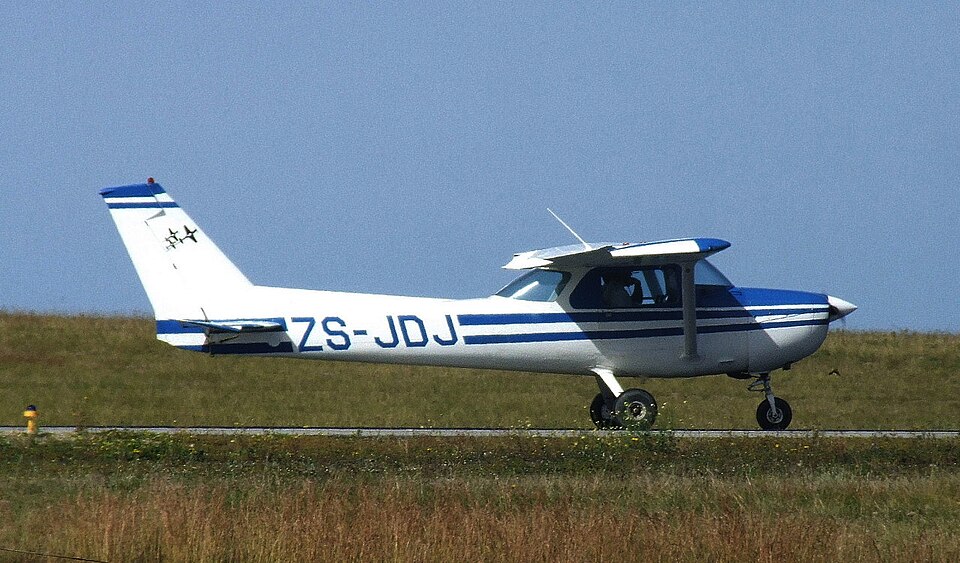
On 13 June 2007, a Cessna 150M, registration ZS-JDJ, was conducting a training flight near George Aerodrome when the engine ceased operation. The flight, which included a flight instructor and a private pilot, was performing circuit training following a recent maintenance inspection. While on final approach for Runway 11, the engine stopped and briefly attempted to restart before failing completely.
Unable to reach the runway, the pilot selected an open field for a forced landing. During the descent, the pilot identified telephone wires in the primary landing site and transitioned to a second, smaller field. To minimize impact speed and avoid a nearby fence, the pilot executed a stall prior to touchdown. Upon impact, the nose wheel assembly collapsed, causing the aircraft to skid and sustain substantial damage to the engine cowling, induction manifold, and firewall. Despite the impact, there were no injuries to the crew.
The investigation
SACAA AIID investigators examined the aircraft's recent operational history and fuel logs. The investigation established that the aircraft had been refuelled with 85 litres of avgas on 11 June 2007. Since that uplift, the aircraft had completed several flights and a Mandatory Periodic Inspection (MPI).
Technical analysis of the engine revealed no evidence of mechanical malfunction or pre-impact failure. Post-accident testing showed the engine operated normally after the induction manifold was replaced. However, investigators noted a discrepancy in the flight folio, which erroneously indicated that the fuel tanks were full at the start of the accident flight. Calculations based on the aircraft's hourly consumption and the time elapsed since the last refuelling suggested that the usable fuel had been depleted.
Findings
- The engine failure was most likely caused by fuel exhaustion.
- The crew relied on fuel gauges rather than physically verifying the fuel levels via a dipstick.
- The pilot-in-command accepted the fuel status reported by the private pilot without independent verification.
- The flight folio contained inaccurate information regarding the aircraft's fuel state.
- The crew failed to follow the Pilot's Operating Handbook (POH) emergency procedures by neglecting to turn the fuel shutoff valve to the 'OFF' position following the forced landing.
- The aircraft was operated without adhering to the required minimum fuel reserves.
Safety action
- It is recommended that a warning placard be installed in this aircraft series to prohibit flight when fuel levels indicate one-quarter tank or less, preventing starvation during uncoordinated flight.
- A recommendation was made to install a placard advising that fuel levels must be verified using an accurate dipstick, as gauges may be unreliable.
- A recommendation was issued to ATNS to implement a secondary backup system for recording air traffic communications to ensure data availability for future investigations.