History of Flight
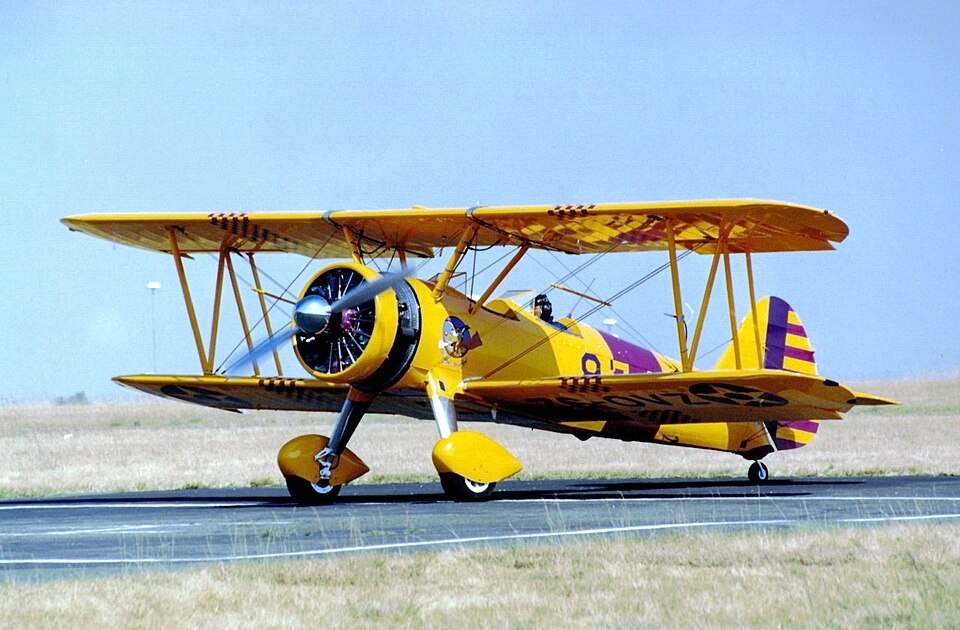
On 29 June 2007, at 1342Z, a Boeing Stearman E75, registration ZS-OVZ, departed Tzaneen Aerodrome (FATZ) for an air show practice. The pilot, a 58-year-old male commercial pilot, had a total flying experience of 2796.7 hours, with 563.5 hours on type. Shortly after takeoff, the pilot changed frequency to 129.3 MHz and began aerobatic practice in a display area south of the aerodrome. During a stall turn manoeuvre at approximately 2500 feet above ground level, a loud bang was heard, and witnesses observed a large part of the aircraft—later identified as the engine—separate and fall. The aircraft then descended with a swinging motion and impacted the ground in a 90-degree nose-down attitude.
Injuries
The pilot sustained fatal injuries. A post-mortem examination attributed the cause of death to head injuries. No other persons were on board.
Damage to Aircraft
The aircraft was substantially damaged. On impact, all right-hand wing support struts broke; on the left wing, only one strut broke. The engine was found approximately 500 metres away from the main wreckage, in a direction of 355° magnetic.
Personnel Information
The pilot held a Commercial Pilot Licence, valid with endorsements including Instructor Rating Grade 3, Instrument Rating, Test Pilot Rating Class 2, and Night Rating. His medical certificate was valid until 2 October 2007, with a restriction to wear corrective lenses. He had no previous accidents.
Aircraft Information
The aircraft, a Boeing Stearman E75 (serial number 75-874, year of manufacture 1941), had a total airframe time of 6316 hours. The last MPI was on 1 March 2007 at 6301 hours. The engine was a Pratt & Whitney R985-AN3 (serial number 21845) with 5876 hours since new and 415.19 hours since overhaul. The propeller was a Hamilton Standard 2D 30-237.
Meteorological Information
Weather conditions at the time included wind from 090° true at 3 knots, temperature 22°C, visibility 10 km or more, no cloud, and a high pressure system extending into the northeastern part of the country, resulting in fine weather with clear skies over Limpopo Province.
Wreckage and Impact Information
The accident site was located in bush area at coordinates S23° 49.824' E030° 19.400'. The aircraft impacted at a 90° nose-down attitude and came to a complete stop in that position. The cabin area remained intact; the seat and safety harness did not fail.
Tests and Research
Metallurgical analysis of the four engine mount bolts (NAS-148 type, high tensile steel) revealed fatigue crack profiles on all four bolts. The right-hand top bolt showed evidence of severe gyroscopic forces and was likely the first to fail. The investigation determined that low carbon steel washers used during assembly of the engine mount bolts contributed to a reduction in thickness under compressive forces, which caused bolt movement and fatigue crack initiation in the thread roots.
Probable Cause
The aircraft's engine separated from the fuselage in flight due to low carbon steel washers used during installation of the engine.