Introduction
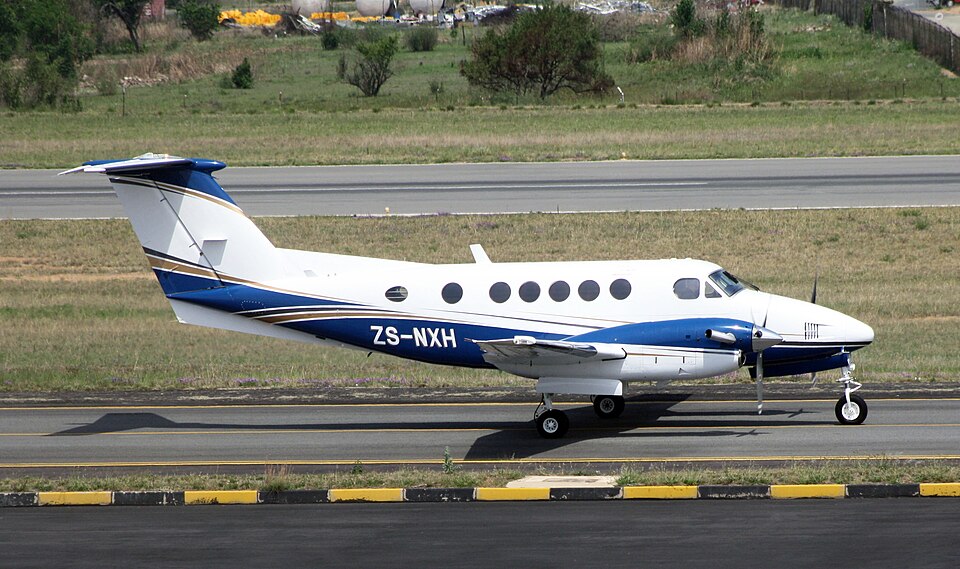
On 18 December 2008, the South African Civil Aviation Authority (SACAA) was notified of an incident involving a Beech King Air 200, registration ZS-NXH, operated by Ferox Investment (PTY) LTD. The aircraft sustained a partial landing gear collapse during landing on Runway 06L at Lanseria Aerodrome (FALA). No injuries were reported among the two pilots and two passengers.
History of Flight
The flight was a return charter from FALA to Mafikeng Aerodrome (FAMM) and back. The first leg was uneventful. During the return, while descending from flight level 160 to 8,000 feet, the co-pilot selected gear down on left base but received no positive indication (three green lights). The crew performed a fly-past of the tower; the air traffic controller confirmed the gear appeared down. A landing was attempted, but on touchdown the crew felt the aircraft sinking and initiated a go-around. The co-pilot reported hearing a sound from the left gear.
A second landing attempt was made using manual gear extension, with the left gear touching down first in an effort to push the gear into place, but a second go-around was executed. A third attempt followed a mayday call and passenger briefing. The captain kept the nose high to bleed speed. The aircraft skidded on its rear underside and left flap before the landing gear partially collapsed approximately 200 meters from the touchdown point. The aircraft came to a halt about 500 meters from touchdown on Runway 06L. Passengers evacuated normally and were taken to the terminal by emergency services.
Damage and Injuries
Damage was limited to the rear fuselage undersurface, left (port) main landing gear doors, and both inboard flaps. Neither pilots nor passengers sustained injuries.
Investigation Findings
On-site inspection revealed no visible failures. The aircraft was recovered to a hangar for further investigation. Retraction and extension tests could not be performed due to damage to the left main landing gear actuator. The landing gear motor was removed and tested, showing no faults. However, testing of the gearbox revealed a faulty clutch assembly, which caused the electric motor to run continuously until protected by a 60-amp circuit breaker. The bending of the left main actuator was attributed to the malfunction of the emergency system.
A review of maintenance records indicated that the aircraft had a landing gear indication problem the day before the incident. The maintenance organization corrected a loose flap/throttle switch on 16 December 2008.
Probable Cause
Failure of the landing gear-gearbox clutch assembly resulting on a 60Amp circuit breaker protecting the electrical motor which was running continually as a result of a faulty clutch assembly.
Contributory Factors
1. Crew’s failure to use the emergency system when they became aware of the main system failure. 2. The bending of the left main gear actuator which rendered the emergency system inoperable.