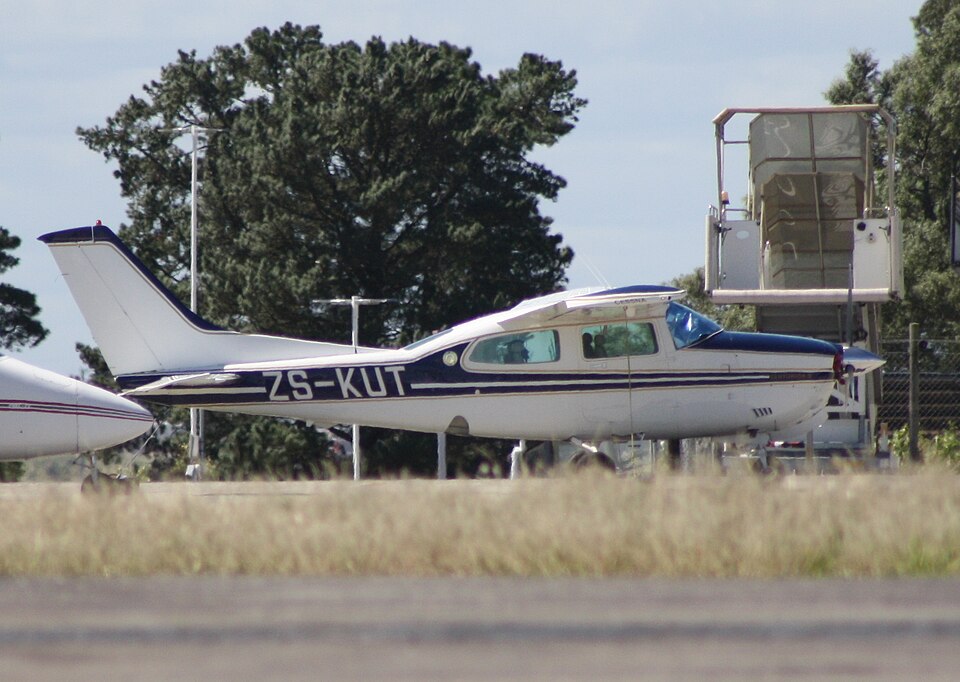
Introduction
On 22 November 2009, a Cessna 210N (registration ZS-KUT) operated by a private pilot experienced a landing gear failure during a cross-country flight. The aircraft sustained damage during an emergency landing at Cape Town International Aerodrome (FACT). The pilot, who held a commercial pilot license, was uninjured.
History of Flight
The pilot departed from Stellenbosch Aerodrome (FASH) on a flight to Saldanha-Vredenburg Aerodrome (FASD) and planned to return to Stellenbosch. Shortly after takeoff, the landing gear retracted normally. While over FASD, intending to perform a touch-and-go landing, the pilot selected landing gear down. A strange noise was heard from the hydraulic pump, and the gear only partially extended, with an amber light illuminating on the instrument panel. The pilot aborted the touch-and-go and proceeded to FACT.
En route, the pilot attempted to use the emergency hand pump but without success. The autopilot was engaged to allow the pilot to check the hydraulic fluid reservoir, which was found empty. The pilot added hydraulic fluid from a bottle carried on board. After resetting the circuit breaker and recycling the gear, it still did not extend. Another aircraft confirmed that only the nose landing gear appeared down.
Emergency Landing
The pilot contacted FACT air traffic control and requested an emergency landing, which was granted for runway 16. The landing was executed with the main wheels up. The aircraft veered right before stopping. The propeller, left wing, lower fuselage, and nose landing gear were damaged. The pilot sustained no injuries. Minor scratches were left on the runway.
Investigation
Post-accident examination of the landing gear system was conducted at a maintenance organization. The aircraft was placed on jacks and the gear was cycled multiple times using both the electrical control handle and the emergency hand pump; the gear extended and retracted normally. No hydraulic leaks were found. The nose landing gear had broken off during the belly landing, preventing a full functional test of that component. The hydraulic power pack had been overhauled in July 2008 with no reported issues.
Probable Cause
The investigation concluded that the landing gear failure was undetermined. No mechanical defect was identified that could explain why the gear failed to extend in flight.