History of Flight
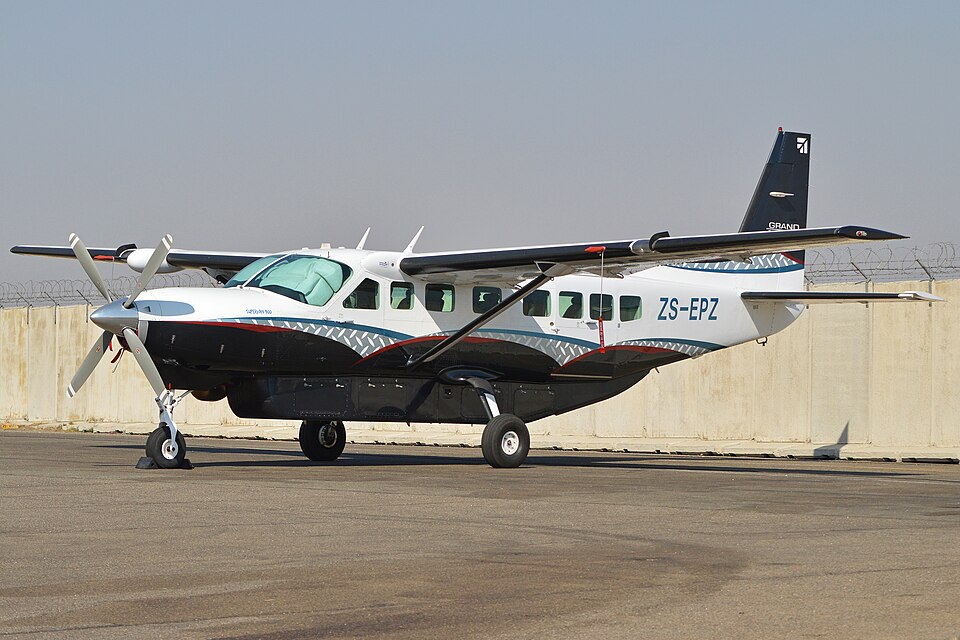
On 10 February 2014, at approximately 1030Z, a Cessna Caravan C208B (registration ZS-EPZ) operated by Federal Air was preparing for a charter flight from MalaMala Aerodrome (FAMD) to O.R. Tambo International Airport (FAOR). The aircraft had two certified commercial pilots and 11 passengers on board. After an uneventful start-up and pre-flight checks, the pilot flying (PF) taxied the aircraft from the apron toward the threshold of runway 16.
During the initial taxi, the aircraft began moving downhill on the taxiway. The aircraft then drifted to the left of the centerline. The PF applied corrective right input but was unsuccessful. The aircraft continued drifting left, departing the taxiway. The PF applied maximum brakes, but they were ineffective. He then requested the first officer (pilot not flying) to apply the right brake, but this also failed to produce any braking action. The aircraft continued rolling, entered a ditch running parallel to the taxiway, and collided with an embankment. The PF immediately pulled the fuel shut-off/feather lever to prevent fuel from entering the engine.
The aircraft slid to the left, and the left wing impacted the embankment. The first officer opened the doors, and all occupants evacuated safely. No injuries were reported. The PF informed the operator of the occurrence via mobile phone.
Injuries to Persons
No injuries (fatal, serious, or minor) were sustained by any of the 2 crew members or 11 passengers.
Damage to Aircraft
The aircraft was substantially damaged during the accident sequence. No other damage was observed at the accident site.
Investigation Findings
Post-accident investigation revealed no anomalies with the rudder or brake system. The probable cause was determined to be poor airmanship.