What happened
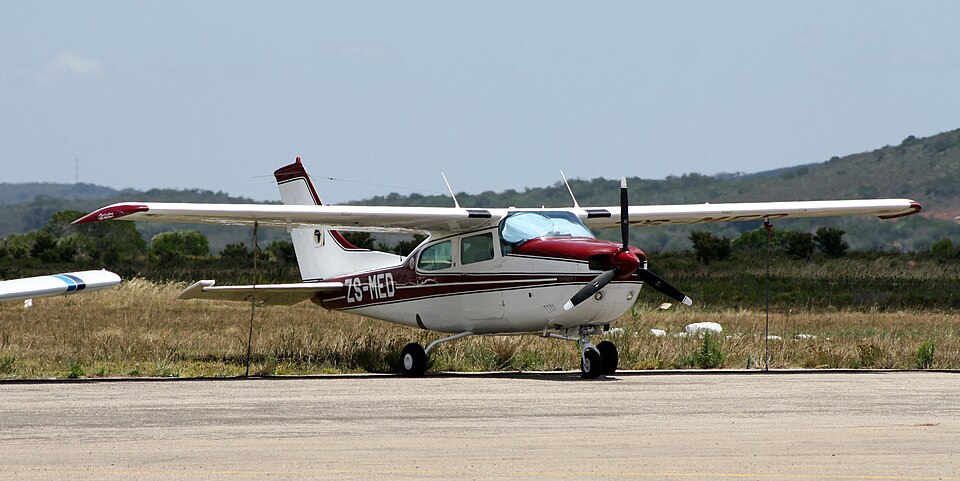
On 09 May 2014, a pilot operating a Cessna 210L Centurion, registration ZS-MED, departed Wonderboom aerodrome for Mahikeng. The flight, conducted under visual flight rules, was diverted to Lichtenburg aerodrome after the pilot learned via a NOTAM that the runway lights at the intended destination were unserviceable, making a night landing unsafe.
During the approach to Lichtenburg, the pilot attempted to extend the landing gear but found it would not deploy. Despite following the aircraft flight manual's malfunction procedures and attempting to use the manual emergency hydraulic pump for approximately 20 strokes, the gear remained retracted. The pilot subsequently performed a belly landing on tarmac runway 3 and the aircraft skidded for roughly 150 metres. While the aircraft sustained substantial damage to the engine, propeller, and belly, the pilot escaped the wreckage uninjured.
The investigation
SACAA AIID investigators examined the aircraft's hydraulic system and landing gear mechanism following the incident. Post-accident testing revealed that the landing gear system was fully functional. When the aircraft was lifted and inspected, the gear was found to be in a locked position, and subsequent extension and retraction tests—including manual operations—showed no defects. The investigation also confirmed that the gear warning horn was operational and would sound if the throttle was retarded with the gear in the up position. Furthermore, the investigation found that the pilot's claim regarding the failure of the gear to extend was incorrect, as the mechanical and hydraulic systems were working according to manufacturer specifications.
Findings
- The primary cause of the accident was that the pilot forgot to extend the landing gear prior to touchdown.
- The pilot failed to confirm the correct landing configuration using the required pre-landing checklist.
- The pilot demonstrated poor airmanship and a disregard for standard safe operating procedures.
- A lack of situational awareness was noted, as the pilot failed to respond to the aircraft's automated gear warning horn during the approach.