History of Flight
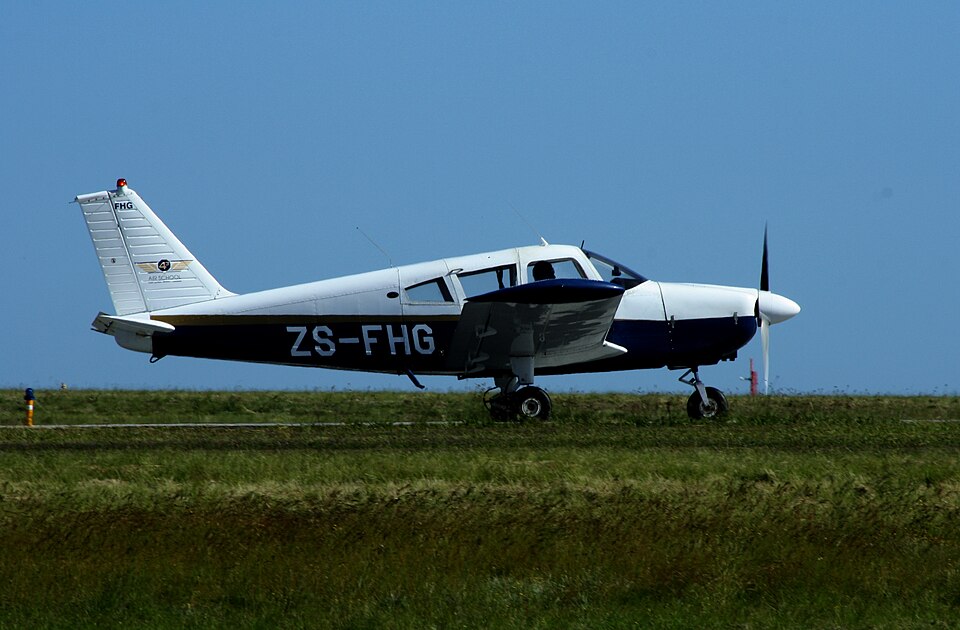
On Saturday, 7 November 2015, at approximately 1048Z, a Piper PA-28-180 aircraft, registration ZS-FHG, was conducting a navigation flight exercise from Port Elizabeth International Airport (FAPE) to George Aerodrome (FAGG) under visual flight rules (VFR). The pilot was the sole occupant. Prior to departure, the aircraft received 59 litres of Avgas LL 100 fuel. The pilot experienced difficulty starting the engine: the first attempt failed, the second started but quit within seconds, and the third attempt succeeded. The aircraft taxied to runway 26 and took off. According to the air traffic controller, the initial climb appeared normal until about 600 feet above ground level, when the pilot declared an engine emergency, reporting that the engine was cutting out and requesting to land back on runway 26. The controller cleared the pilot to land.
The aircraft flew past the runway end and initiated a right turn. During the turn, the aircraft lost height rapidly and could not reach the runway. It struck the wildlife exclusion airport perimeter fence and collided with the ground, bursting into flames. The pilot was fatally injured. The aircraft came to rest on its belly, facing east. Radar images showed the aircraft initiating a right turn at approximately 600 feet, losing 200 feet in 9 seconds, and then disappearing from radar.
Eyewitnesses, contractors working on the airport fence, reported hearing an abnormal engine sound, then saw the aircraft turn right towards them. They ran away for safety, and the aircraft impacted the fence and caught fire. No injuries among the ground personnel were reported.
Injuries to Persons
The pilot sustained fatal injuries. No other persons were injured.
Damage to Aircraft
The aircraft was destroyed by a post-impact fuel-fed fire.
Other Damage
The airport perimeter fence, consisting of four complete panels and three posts, was damaged.
Personnel Information
The pilot was a 22-year-old Chinese male, holding a South African private pilot license issued on 7 July 2015. He had a total of 126.5 flying hours, with 102.7 hours on type. His medical certificate was valid until 31 January 2017, with no restrictions. He had no previous accident history.
Probable Cause
Unsuccessful forced landing due to engine failure. The pilot’s decision not to land on the remaining runway ahead and the loss of engine power. A contributing factor was non-adherence to emergency procedures as prescribed in the Pilot Operating Handbook.